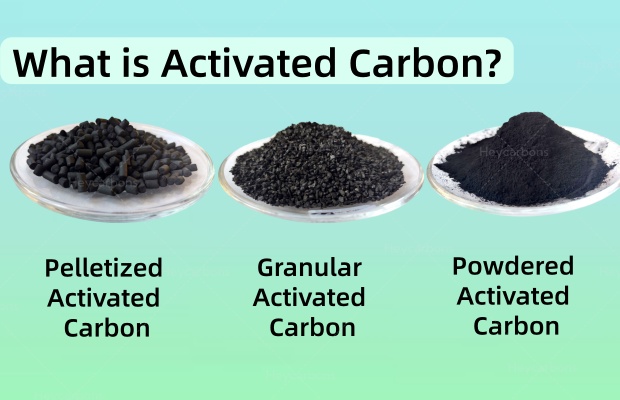
Activated carbon is a highly porous carbon material used to remove unwanted substances from liquids and gases through adsorption. It is widely used in water treatment, air purification, food and beverage processing, gold recovery, and many other industrial applications.
Because of its large specific surface area and carefully developed pore structure, activated carbon can capture a wide range of organic compounds, odor-causing substances, and other impurities. In practice, the performance of activated carbon depends on its raw material, manufacturing process, pore structure, particle shape, and the specific application requirements.
What Is Activated Carbon?
Activated carbon is a carbon-based adsorbent that has been processed to create a highly developed pore structure. These pores increase the available surface area inside the material, making it highly effective for adsorption. Adsorption is different from absorption: instead of being soaked into the material like water into a sponge, unwanted molecules attach to the surface of the carbon, especially inside its micropores, mesopores, and macropores.
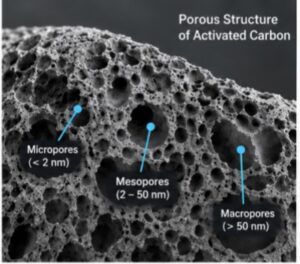
Activated carbon is commonly produced from carbon-rich raw materials such as coal, coconut shell, nutshells, and wood. These raw materials are first carbonized and then activated under controlled conditions by physical steam or chemical phosphoric acid methods to develop a porous structure. Through various process designs, activated carbon suitable for diverse applications—ranging from liquid-phase decolorization to gas purification—can be produced.
How Does Activated Carbon Work?
One of the working principle of activated carbon is physical adsorption. When a liquid or gas passes through or contacts the carbon, target molecules are attracted to and retained by the surface of the material. Because activated carbon contains a network of internal pores, it offers a very large contact area within a relatively small volume.
- The pore size distribution of the carbon
- The type and concentration of the target contaminants
- Contact time between the medium and the carbon
- Temperature, pH, humidity, and flow conditions
- The physical form of the activated carbon
Different pollutants require different pore structures. For example, some applications (such as gold recovery) need a carbon with more micropores for smaller molecules, while others benefit from broader pore distribution for larger compounds (such as decolorization). That is why the right product selection is essential for achieving stable performance.
The other is chemical adsorption. Many applications are well suited to using impregnated or catalytic activated carbon. First, pollutants are adsorbed into the pores of activated carbon through physical adsorption, and then they undergo catalytic oxidation or chemical reaction with the chemical substances loaded on the activated carbon to achieve the purpose of removing pollutants.
Different target contaminants require different impregnation chemicals. The choice must be made based on the specific application. This page showcases the different impregnation agents, their target substances for removal, and applicable applications: ♦ https://heycarbons.com/impregnated-activated-carbon/

How Is Activated Carbon Made?
There are two main methods for producing activated carbon: the physical steam method and the chemical phosphoric acid method.
Activated Carbon Produced by the Physical Method
Activated carbon is manufactured through a series of controlled production processes, typically including raw material selection, carbonization, activation, post-treatment, and quality inspection.
First, suitable carbonaceous materials are selected. Common raw materials include coal, coconut shell, nutshells, and wood. Different raw materials possess distinct physical properties and varying potential for pore structure development.
Next, the material is carbonized at high temperature (400-700℃) to remove volatile components and form a basic carbon structure. Subsequently, controlled high-temperature steam activation under 900-1200℃ is performed to form or enlarge pores within the carbon material. This step is crucial for achieving the high adsorption capacity of the final product.
Finally, the activated carbon is screened, dust removed, packaged and tested according to application requirements.
Modification treatments—such as acid washing, impregnation, or catalyst loading—can also be performed according to customer requirements to enhance the activated carbon’s adsorption capacity for specific applications.
Activated Carbon Produced by the Chemical Phosphoric Acid Method
Chemical phosphoric acid production typically uses phosphoric acid as an activator. Before carbonization and activation, the raw material is impregnated with phosphoric acid (H3PO4), followed by washing to remove residual acid and soluble compounds.
The carbonization and activation processes are combined into one, with the temperature controlled between 450°C and 900°C. Phosphoric acid acts as a catalyst, accelerating the pore formation process.
What are the Main Types of Activated Carbon?
Activated carbon can be classified by shape, raw material, and modification method. Understanding these categories helps buyers choose the right product more efficiently.
-
By Shape
Powdered Activated Carbon PAC
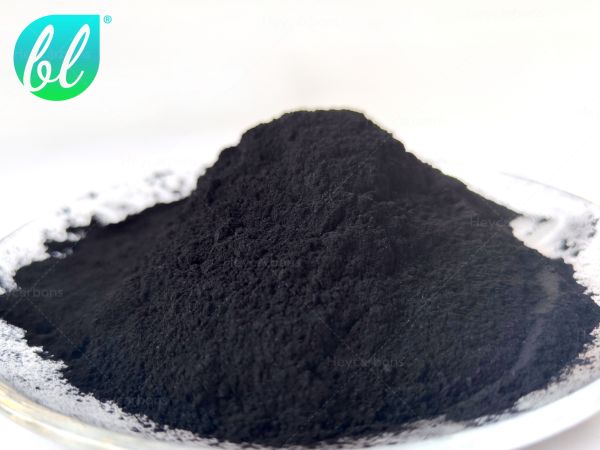
Powdered activated carbon has a fine particle size (200, 325 mesh) and is often used for decolorization, wastewater treatment, and certain industrial purification processes. It is especially suitable for applications that require fast adsorption and short contact time.
Powdered activated carbon PAC features a fine particle size (200, 325 mesh) and is commonly used for decolorization, wastewater treatment, and various industrial purification processes, as well as for removing unwanted colors, odors, and other impurities during food and beverage processing.
Powdered activated carbon is particularly well-suited for applications requiring rapid adsorption and short contact times. In water treatment, PAC can be dosed directly into the water and subsequently removed via an appropriate solid-liquid separation process following adsorption.
More detailed information about Heycarbons Powdered Activated Carbon, please click:
♦ https://heycarbons.com/powder-activated-carbon/
Granular Activated Carbon GAC
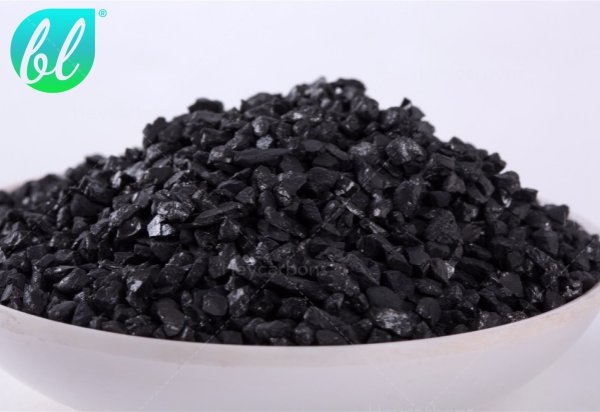
Granular activated carbon (GAC) has relatively large particles, typically available in sizes such as 4×8, 6×12, 8×30, 8×16, 12×40, 30×60, and 80×150. It is widely used in applications such as drinking water treatment, industrial wastewater purification, deodorization, and dechlorination.
It is commonly employed in fixed-bed treatment systems, including pressure vessels and gravity filtration systems.
And granular activated carbon is a highly popular adsorbent material in water treatment, capable of removing a wide range of organic pollutants as well as substances that cause unpleasant odors and tastes in drinking water.
More detailed information about Heycarbons Granular Activated Carbon, please click:
♦ https://heycarbons.com/granular-activated-carbon-heycarbons/
Pelletized Extruded Activated Carbon EAC
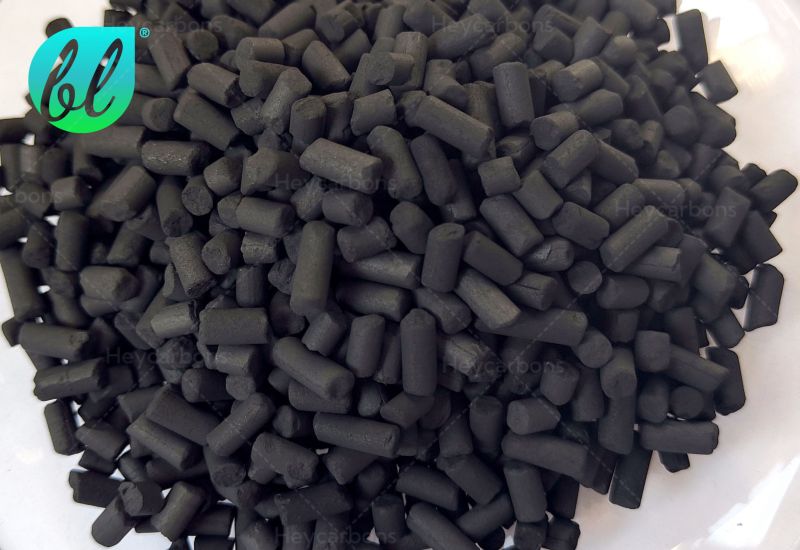
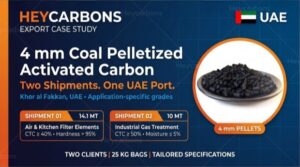
Pelletized activated carbon is usually made into cylindrical shapes and is often used in gas treatment and air purification. It is suitable for applications such as H2S removal, VOCs control, flue gas treatment, biogas purification, and natural gas purification.
For activated carbon selection for gas treatment, evaluate more than diameter of the pellets.. Outlet contaminant concentration, gas flow, bed temperature, pressure differential, and inlet moisture are relevant performance-monitoring parameters.
More detailed information about Heycarbons Granular Activated Carbon, please click:
♦ https://heycarbons.com/pellet-activated-carbon/
-
By Raw Material
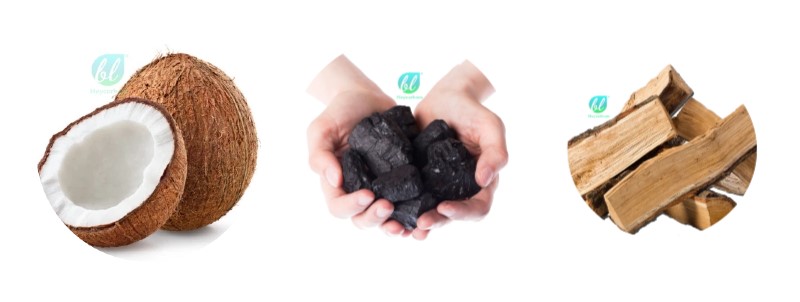
Coconut Shell Activated Carbon
Coconut shell activated carbon is made from coconut shells grown for more than five years using controlled carbonization and activation processes (usually using high-temperature steam).
It is valued for its well-developed microporous structure, high hardness, and strong adsorption capacity.
Coconut shell activated carbon is often used in drinking water treatment, gold recovery, beverage processing, dechlorination, deodorization, and catalyst support applications.
Nutshell Activated Carbon
Commonly used raw materials for nutshell activated carbon include palm shells, apricot shells, peach shells, walnut shells, and date pits. Nutshell activated carbon features high iodine value, low ash, high strength. Can also be used in applications such as water treatment, gold extraction, and food purification.
Nutshell activated carbon is cost-effective and can effectively replace coconut shell activated carbon in certain applications. In practice, raw materials should be selected based on their intended use and specific requirements.
Coal Activated Carbon
Coal-based activated carbon can be made from various types of coal: bituminous coal from Datong, Shanxi, and Xinjiang; anthracite from Ningxia; and lignite. By selecting different coal raw materials and activation conditions, parameters such as pore size distribution, surface area, apparent density, hardness, and ash content can be flexibly adjusted to meet different customer needs.
Compared to coconut shell activated carbon, coal-based activated carbon has a wider distribution of micropores and mesopores, making it particularly suitable for processing mixtures of organic compounds containing different molecular sizes. It’s widely used for gas purification, wastewater treatment, solvent recovery, and industrial water treatment.
In addition, coal-based activated carbon has a relatively low cost, making it very suitable for large-capacity processing systems.
More detailed information about Heycarbons Coal Activated Carbon and Coconut Shell Activated Carbon, please click:
♦ https://heycarbons.com/coconut-shell-vs-coal-gac/
Wood Activated Carbon
For wood-based activated carbon, popular activation techniques such as physical steam activation, phosphoric acid activation, and zinc chloride activation are available.
The physical steam activation method typically results in a more developed micropore structure, high iodine value, and a pH range of 8-10. Activated carbon powder produced through chemical phosphoric acid methods has a more developed mesopore structure, higher methylene blue value, and customizable caramel value, molasses value, with adjustable pH 2-4, 3-5, 5-7.
Wood-based activated carbon is commonly used in decolorization and purification of food, medicine, cosmetics, and sewage water.
More detailed information about Heycarbons Wood Activated Carbon, please click:
♦ https://heycarbons.com/wood-activated-carbon/
-
Modified Activated Carbon
Acid-Washed Activated Carbon
Acid-washed activated carbon is treated to reduce ash content and improve purity. After acid washing, the ash of coconut shell activated carbon can be as low as ≤1%; ash of coal activated carbon ≤3, 5, 6, 8%.
It is typically used in applications requiring high purity, such as food, pharmaceuticals, chemicals, and cosmetics.
More detailed information about Heycarbons Acid Washed Activated Carbon, please click:
♦ https://heycarbons.com/acid-washing-activated-carbon/
Impregnated Activated Carbon
Impregnated activated carbon is a material that introduces specific chemicals (such as metal salts, alkaline substances, acidic substances, etc.). By introducing substances into the pore structure of ordinary activated carbon via physical or chemical methods, special adsorption properties are imparted to it.
This modification enables impregnated activated carbon to more effectively adsorb or remove certain specific types of pollutants through chemical reactions.
It can be used to remove H2S, chlorine, ammonia, VOCs, and other substances from the air. It is also suitable for personal protection applications—such as gas filters and protective masks—where it adsorbs and decomposes harmful chemicals. Additionally, it can be used to remove contaminants like heavy metal ions and chlorides from water.
More detailed information about Heycarbons Impregnated Activated Carbon, please click:
♦ https://heycarbons.com/impregnated-activated-carbon/
Catalytic Activated Carbon
Activated carbon can serve as a catalyst for various isomerization, polymerization, oxidation, and halogenation reactions; it can also act as a catalyst support, carrying various catalysts to create catalytically active surfaces that accelerate specific chemical reactions.
Catalysts that can be supported include: manganese dioxide (MnO2), iron oxide (Fe2O3), copper oxide (CuO), magnesium oxide (MgO)…
Compared to ordinary activated carbon, catalytic Activated Carbon not only possesses superior adsorption capabilities but also actively decomposes, transforms, or removes various harmful gases and pollutants. It is widely used in residential and commercial water filtration systems, industrial gas treatment for toxic emissions (such as H2S and SO2), gas masks, liquid deodorization and decolorization, and impurity removal in the food and beverage industry.
Heycarbons activated carbon can also support a wider range of catalyst types, for more details, please click: ♦ https://heycarbons.com/catalytic-activated-carbon/
What Is Activated Carbon Used For?
Activated carbon has a wide range of industrial uses because it can remove odors, color, contaminants, and certain organic compounds from both liquids and gases.
Activated Carbon for Water Treatment
In the field of water treatment, activated carbon is used for treating tap water, drinking water, purified water, industrial water, rainwater, river water, and wastewater. It effectively removes residual chlorine, odors, color, and organic impurities—including BOD, COD, chloramines, halogenated hydrocarbons, methanol, esters, and phenols.
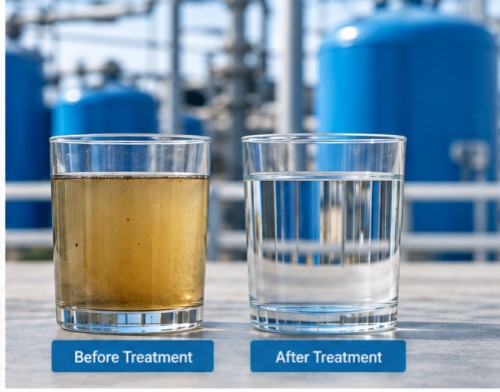
For water treatment, customers predominantly choose coal-based granular or powdered activated carbon, while coconut shell granular activated carbon is used for high-end drinking water applications.
Specific applications vary depending on the type of activated carbon; for details, please see:
♦ https://heycarbons.com/water-tretament/
Activated Carbon for Air and Gas Purification
Activated carbon is widely used for removing H2S, VOCs, odors, industrial exhaust pollutants, and other gases. It is used in sewage odor control, gas masks, air filters, flue gas treatment, biogas purification, and solvent recovery systems. Coal pelletized activated carbon is often preferred for gas-phase applications.
Coconut shell granular activated carbon is usually added to cigarette filters. Some clients use coal-based powdered activated carbon to treat waste flue gas from power plants and steel mills by the injection method.
Please click here for specifications of activated carbon for gas treatment:
♦ https://heycarbons.com/activated-carbon-for-air-purification-application/
Activated Carbon for Food and Beverage Decolorization
Activated carbon is often used in food and beverage industries for decolorization and purification. It can remove a variety of synthetic dyes and natural pigment molecules such as methyl orange, Congo red, crystal violet, carotenoids, anthocyanins, etc.
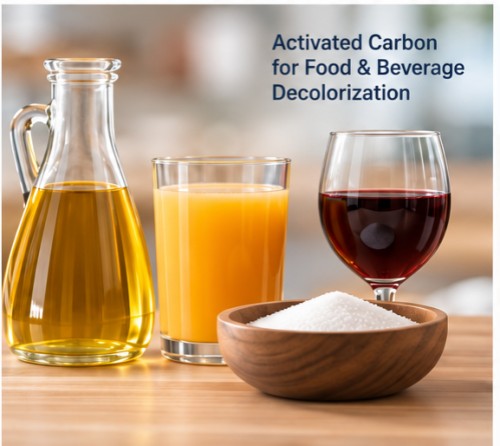
Common applications include glucose, sucrose, glycerol, wine, liquor, juice, edible oil, and related production processes.
Wood powdered, coal reagglomerated and granular products are available for food-processing applications.
For more details, please contact: ♦ https://heycarbons.com/activated-carbon-for-decolorization/
Activated Carbon for Gold Recovery
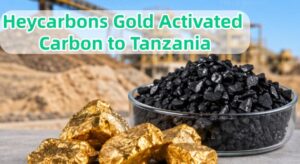
Activated carbon, especially coconut shell granular activated carbon, is widely used in gold recovery (CIP, CIL, CIC) and precious metal extraction. It can help adsorb gold complexes during the recovery process and is an important material in mining and metallurgical applications.
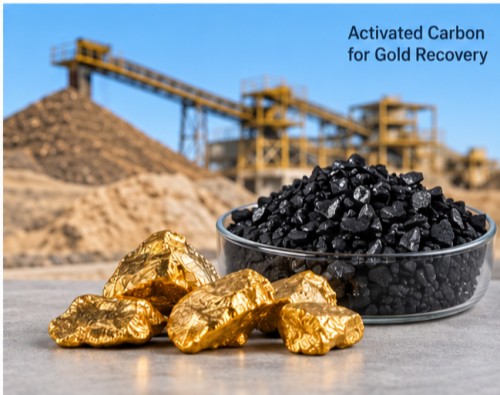
When evaluating activated carbon for gold recovery, it is essential to consider not only its gold adsorption performance but also its mechanical strength and abrasion resistance, as activated carbon loss directly impacts the economics of the entire production process.
For more details, please contact: ♦ https://heycarbons.com/activated-carbon-for-gold-recovery/
How to Choose the Right Activated Carbon?
Choosing the right activated carbon depends on your application, target contaminants, and operating conditions.
1. Confirm Specific Applications
Confirm the following information before selecting a carbon product:
- Is the application for liquid or gas treatment?
- What contaminants need to be removed?
- What is the temperature, pH, and humidity conditions?
- Is the system batch, fixed-bed, or continuous?
- Are there any purity, ash, or particle size requirements?
2. Compare Relevant Specifications
Common and informative product testing parameters include particle size distribution, moisture content, ash content, apparent density, and strength, as well as adsorption performance tests tailored to specific applications. ASTM has established various test methods for these parameters, as well as for liquid-phase and gas-phase adsorption performance.
When obtaining metric data provided by suppliers, the testing methods employed should also be verified.
3. Do Not Select by Iodine Value Alone
A higher iodine value does not necessarily mean better performance in your actual application.
Iodine value is a relative indicator used to measure the porosity characteristics of activated carbon under specific test conditions. ASTM clearly states that iodine value does not necessarily reflect the adsorption capacity of activated carbon for other substances.
Different applications require different pore structures and product characteristics. Therefore, a comprehensive technical evaluation is more important than relying on a single parameter.
Why Choose Heycarbons Activated Carbon?
Heycarbons, a China professional activated carbon manufacturer since 2005, is a comprehensive enterprise involved in activated carbon production, R&D, sales, and services. Export globally.
Heycarbons specializes in the production and sales of powdered, granular, and pelletized activated carbon derived from coal, coconut shell, and wood. We also offer acid-washed, impregnated, and catalytic activated carbon to meet specific requirements. Backed by stable production capabilities, comprehensive testing equipment, and customized services, Heycarbons provides suitable activated carbon solutions for applications such as water treatment, air purification, food decolorization, and gold recovery.
We support product customization, free samples, and third-party testing.
Heycarbons provides professional activated carbon solutions and a comprehensive range of activated carbon products for water treatment, air purification, food decolorization, and gold recovery applications.
Looking for activated carbon for your project? Contact Heycarbons for product recommendations, samples, and a quotation.
FAQs About Activated Carbon
Is activated carbon the same as activated charcoal?
Generally speaking, the meanings of these two terms are very similar, and they can be used interchangeably in many situations. IUPAC also lists “active carbons” and “active charcoals” as related terms.
However, in some cases, “activated charcoal” refers to raw materials made from plants (wood, coconut shell, nutshells), while “activated carbon” refers to raw materials made from coal. For more detailed information, please read ♦ https://heycarbons.com/activated-carbon-vs-charcoal/
In fact, when actually purchasing the product, one should not rely solely on the name; it is still necessary to verify details such as the raw material, physical form, intended application, and specifications.
How is activated carbon different from ordinary charcoal?
Activated carbon differs from ordinary charcoal. Although both are carbon-based materials, activated carbon undergoes specialized processing and activation, resulting in a highly developed pore structure and a large internal surface area, which provide superior adsorption capabilities.
Ordinary charcoal has not undergone the same degree of pore development. Consequently, activated carbon significantly outperforms ordinary charcoal in terms of adsorption and purification performance.
Which is better, powdered or granular activated carbon?
Neither is universally better. Powdered activated carbon can be dosed directly into water and separated after treatment; it is typically used for rapid treatment and decolorization.
Granular activated carbon, on the other hand, is better suited for filtration systems and fixed-bed adsorption systems.
Powdered activated carbon is for single-use application. Spent powdered activated carbon is usually discharged along with other residues and is generally not recovered for reuse.
However, granular activated carbon can be used continuously and granular activated carbon can be reused through recovery and thermal regeneration.
The specific choice should be determined based on the equipment configuration and treatment objectives.
How long does activated carbon last?
The service life of activated carbon is influenced by various factors, including the specific application, its inherent properties, pollutant load, flow conditions, and system design.
Furthermore, in applications such as water treatment and solvent recovery, once the activated carbon becomes saturated, it can be regenerated using steam or high-temperature treatment, or replaced with activated carbon.
Therefore, a reasonable changeout schedule should be determined through practical testing and outlet-quality monitoring.
How do I know which activated carbon is right for my process?
The most effective approach is to provide the supplier with detailed application information, including target contaminants, the medium to be treated, flow rate, operating conditions, and quality requirements. Professional activated carbon suppliers can then recommend the most suitable carbon product grade based on this information.
Inquiries are welcome!
We guarantee that Heycarbons supplies products in strict accordance with the specifications and quality standards confirmed by both parties. Should any parameters fail to meet the requirements, we will inform you honestly and consult with you prior to shipment. Furthermore, we welcome third-party inspections in any form to ensure that the product quality meets the agreed-upon standards.