Heycarbons TiO2 Impregnated Activated Carbon Supplier From China
Table of Contents
- What is TiO2 Impregnated Activated Carbon?
- TiO2 Impregnated Activated Carbon Features
- What Can TiO2-Activated Carbon Remove and Its Applications
- How to Make TiO2 Impregnated Activated Carbon?
What is TiO2 Impregnated Activated Carbon?
TiO₂-impregnated activated carbon is a composite functional material that combines the high adsorption capacity of activated carbon with the photocatalytic oxidation capacity of TiO₂. It has wide applications in air purification, deodorization, VOC degradation, etc..
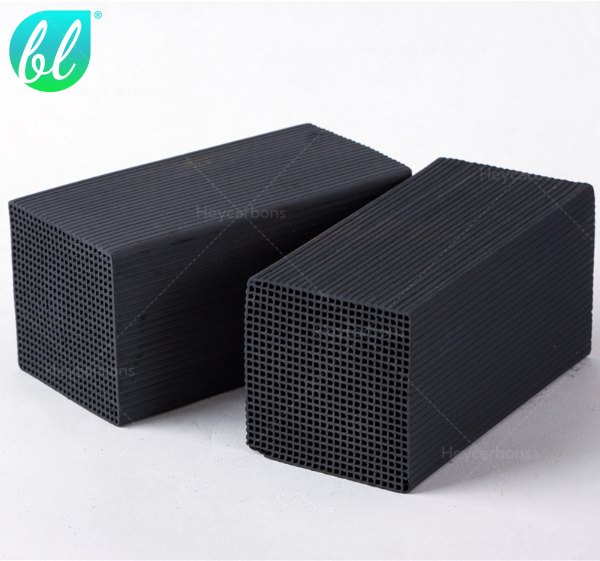
Common types of TiO2 impregnated activated carbon include coconut shell granular activated carbon, coal pelletized activated carbon, and honeycomb activated carbon.
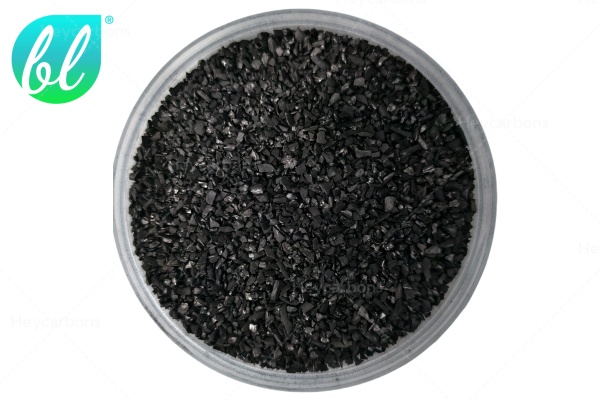
Coconut shell Activated Carbon Impregnated with TiO2: 4*8, 6*12, 8*30, 12*40 mesh. The most commonly used size is 8*30 mesh.
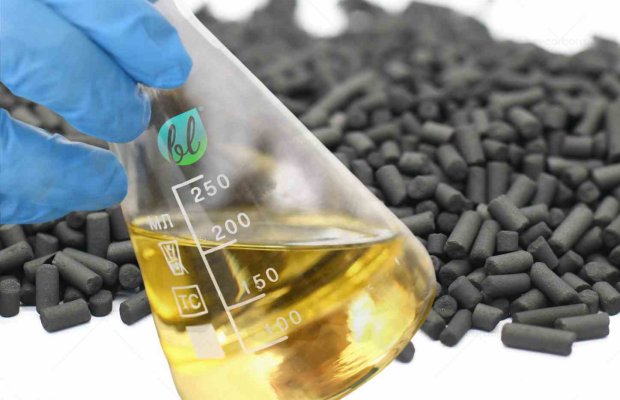
Coal Activated Carbon Impregnated with TiO2: columnar 3-4mm, GAC 8*30 mesh. The most commonly used size is 4mm in diameter.
As a professional TiO₂ impregnated activated carbon supplier, Heycarbons will provide a detailed overview of the characteristics, working principle, applications, and production process of TiO₂ impregnated activated carbon in this article. We can also provide customized activated carbon solutions according to customer requirements.
TiO2 Impregnated Activated Carbon Features
Thanks to Heycarbons precisely controlled preparation process, TiO₂-impregnated activated carbon exhibits excellent physicochemical properties. Specifically, these properties are manifested in the following aspects:
1. Synergy between adsorption and catalysis: Activated carbon adsorption and TiO₂ photocatalytic degradation work in synergy to remove pollutants.
2. Large specific surface area: Activated carbon provides a highly porous structure, which improves the dispersion of TiO₂ in the impregnated material. After loading TiO₂, the specific surface area usually decreases by 10-30%, but still maintains a high adsorption capacity.
3. Strong photocatalytic oxidation capacity:Under ultraviolet or visible light, TiO₂ generates electrons e⁻ and holes h⁺: TiO2+hν→e−+h+. This produces strong oxidizing free radicals OH and O2-, which can degrade VOCs, H2S, NH3, organic pollutants, malodorous substances, microorganisms, etc.
4. UV lamp must be used: Using TiO2-impregnated activated carbon requires the presence of the UV lamp. It is not recommended to use TiO2 activated carbon without UV lamp. For large volume of wastewater with odor, KOH activated carbon is recommended as a more reliable option.
5. Reusable: It can decompose pollutants through photocatalytic oxidation, release some adsorption sites. This allows the activated carbon to regain its adsorption capacity, extending its service life and reducing replacement costs.
6. Antibacterial ability: The free radicals generated by TiO₂ photocatalysis can destroy bacterial cell membranes and oxidize viral proteins. So it is often used in air sterilization materials and medical filter materials.
Because TiO₂-impregnated activated carbon possesses both high adsorption capacity and photocatalytic degradation capability, enabling continuous removal and self-regeneration of pollutants, it is widely used in air purification, industrial waste gas treatment, and water treatment. Below is a detailed introduction:
What Can TiO2-Activated Carbon Remove and Its Applications
TiO2-impregnated activated carbon can remove VOCs, H2S, NH3, organic sulfur, malodorous gases, etc. The following will introduce the relevant mechanisms and applications.
TiO2 Impregnated Activated Carbon for VOCs Removal
Removing VOCs is one of the core and most mature applications of TiO2 impregnated carbon.
TiO₂ impregnated activated carbon can efficiently remove VOCs such as aldehydes, aromatic hydrocarbons, benzene compounds, and total volatile organic compounds (TVOCs) from the air.
Its mechanism of action is as follows: Activated carbon has an extremely high specific surface area and a well-developed pore structure, which can rapidly adsorb VOC molecules from the air and trap them on the carbon surface and within the pores. Under ultraviolet or visible light irradiation, TiO₂ photocatalytically oxidizes and decomposes them into CO₂ and H₂O: VOCs→ CO₂ + H₂O
For this reason, TiO2 impregnated carbon can be used for VOC removal in applications such as indoor air purification (8*30 mesh coconut activated carbon), industrial waste gas treatment (4mm coal pelletized activated carbon), vehicle air purifiers and refrigerator deodorization.
Heycarbons offers customized and more targeted products to meet different application needs.
TiO2 Impregnated Activated Carbon for Foul Odors Removal
TiO2 generates electrons (e⁻) and holes (h⁺) under UV or modified visible light: TiO2+hν→e−+h+
This further generates highly oxidizing hydroxyl radicals (•OH) and superoxide radicals (O₂•⁻).
The adsorbed pollutants are directly oxidized and decomposed on the surface of activated carbon. Reaction mechanisms for common malodorous substances include:
For NH₃ Removal: NH3→N2/NO3−+H2O
- Under the action of TiO₂ photocatalysis, NH₃ is gradually oxidized by active oxygen and eventually converted into harmless nitrogen gas (N₂) or stable nitrate (NO₃⁻), while simultaneously producing water (H₂O).
For H₂S Removal: H2S→S→SO42−
- Hydrogen sulfide is first oxidized to elemental sulfur, and further oxidized to stable sulfates.
For Organic Pollutants: Organic pollutants→ CO₂ + H₂O
Volatile fatty acids: VFA, such as acetic acid): CH3COOH→•CH3→CO2+H2O
- TiO2-impregnated charcoal is particularly effective against acidic odors (garbage smells).
TiO2 impregnated carbon can be used for deodorization in sewage treatment plants, waste incineration plants, and landfill leachate, removing odors such as amines, low concentrations of organic sulfur, volatile fatty acids, and kitchen/waste odors.
When the application is for odor control, about 6-8% TiO2 impregnation content is fine. One of our previous clients used 8% TiO2 impregnated activated carbon for wastewater deodorization.
Notice:
In practical engineering, TiO₂ impregnated activated carbon is often used in combination with ordinary adsorption activated carbon or chemically impregnated carbon to improve deodorization efficiency and extend the material’s lifespan. This is because:
- KOH/KI/CuO impregnated carbon remains the first choice for high-concentration H₂S deodorization. When treating large volumes of odorous wastewater, KOH-impregnated activated carbon is a more reliable option.
- TiO2-impregnated activated carbon is more often used for deep/advanced treatment. A UV lamp must be used during operation.
TiO2 Impregnated Activated Carbon for Dyeing/Pharmaceutical Wastewater
In addition, TiO₂-impregnated coal-based granular activated carbon can also be used for the advanced treatment of dyeing/pharmaceutical wastewater. Under ultraviolet or visible light (modified TiO₂) conditions, through the synergistic effect of adsorption and photocatalysis, it effectively degrades dyes, aromatic organic compounds, phenols, and some recalcitrant organic pollutants (API residues from pharmaceuticals, antibiotics, and endocrine disruptors such as EDCs).
It is suitable for post-treatment processes of wastewater from dyeing, printing, and pharmaceutical industries, and represents an enhanced treatment solution.
How to Make TiO2 Impregnated Activated Carbon?
To effectively combine the adsorption properties of activated carbon with the photocatalytic properties of TiO₂, it is essential to uniformly load TiO₂ onto the surface and pore structure of activated carbon through a suitable preparation process. Therefore, the preparation process of TiO₂-impregnated activated carbon has a decisive influence on its final performance.
There are many methods for producing TiO₂-impregnated carbon. The simplest is directly impregnating a TiO₂ suspension, but this method has several drawbacks: it is prone to pore blockage, has poor dispersibility, and the TiO₂ easily detaches. The main reason is that TiO₂ itself is insoluble in water and does not truly become impregnated into the carbon.
Industrially, TiO₂ powder is rarely impregnated directly. The current mainstream method is to impregnate the activated carbon with a titanium precursor (such as TTIP), allowing TiO₂ to form in situ on the carbon surface.
Heycarbons uses this method, which will be detailed below. Next, we will focus on introducing the Heycarbons impregnation processe and method of TiO₂ impregnated activated carbon.

1. Activated carbon pretreatment
The first step is to treat the coconut shell activated carbon with 5-10% HCl solution for dilute acid washing, followed by washing with deionized water. This can remove impurities, reduces the ash content of activated carbon, and enhances the adhesion of subsequent impregnated materials.
Simultaneously, it increases the oxygen-containing functional groups on the activated carbon surface (providing TiO₂ binding sites). Acid washing generates oxygen-containing functional groups, such as C–OH and C–COOH. These functional groups can form chemical bonds with the titanium precursor: AC–OH + Ti(OR)₄ → AC–O–Ti(OR)₃, followed by hydrolysis: AC–O–Ti(OR)₃ → AC–O–TiO₂, ultimately forming AC–O–TiO₂. This structural bond is exceptionally robust.
Additionally, cid washing and water rinsing can clean the pores, making it easier for the impregnation solution to enter the pores.
Finally, untreated activated carbon typically has a hydrophobic surface, making it difficult for solutions to penetrate the pores. Acid washing, however, can form polar groups such as –OH and –COOH, rendering the surface hydrophobic and allowing the impregnating solution to easily enter the pores.
2. Preparation of titanate solution
TiO₂ is poorly soluble in water and has high chemical inertness, making it difficult for TiO₂ powder to uniformly penetrate the porous structure of activated carbon. It tends to remain mostly on the surface.
We commonly employ titanate esters (such as tetraisopropyl titanium TTIP or tetrabutyl titanium TBOT, Heycarbons often uses TTIP ), dissolving them in alcohol solvents (such as anhydrous ethanol or isopropanol) to form a homogeneous solution. Subsequent controlled hydrolysis then generates a TiO₂ sol, thereby achieving effective impregnation of the activated carbon’s porous structure.
Theoretically, the complete decomposition of 1 kg of tetraisopropyl titanate (TTIP) can generate approximately 0.280 kg of titanium dioxide.
3. Impregnation
Add the pretreated and dried activated carbon to the impregnation tank. Firstly, the impregnation tube is first evacuated to remove air from the activated carbon pores, making it easier for the impregnation solution to enter the micropores under pressure difference.
Then, while maintaining a vacuum or slight negative pressure, the prepared titanate alcohol solution is slowly added to the impregnation tank through a metering pump, gradually submerging the activated carbon.
After adding the liquid, restore the pressure to normal and simultaneously start the stirring or turning device to ensure that the activated carbon is in full contact with the impregnation solution. This facilitates the titanate precursor to enter the activated carbon pores as much as possible and distribute evenly.
During the impregnation process, the temperature needs to be stably controlled between 25 and 40°C. Excessive high temperature will accelerate solvent evaporation and may promote premature reaction of the titanate ester. The impregnation process generally lasts 2 to 6 hours.
4. Control hydrolysis
Water vapor is slowly added into the tank, which slowly hydrolyzes the titanate that has entered the pores of the activated carbon into Ti(OH)₄. The chemical reaction is as follows: Ti(OR)₄ + 4H₂O → Ti(OH)₄ + 4ROH. Then, it is further condensed into titanium oxide precursor.
5. Be dried
Using a vacuum drying oven, belt dryer, or low-temperature rotary drying furnace, gradually remove the alcohol and some moisture from the system to immobilize the titanium precursor on the carbon surface and within the pores.
6. Calcination
Using a nitrogen-protected rotary kiln, tube furnace, or pusher furnace, the precursor is calcined at 200–350℃ in a nitrogen (N2) atmosphere. This process converts them into TiO₂ crystals (primarily anatase), which truly adhere to the activated carbon. This enhances the stability, crystallinity, and adhesion strength of the TiO₂ coating.
Heycarbons specializes in producing high-performance titanium dioxide-impregnated activated carbon. We employ a titanium precursor-based impregnation and production technology to ensure that titanium dioxide is uniformly distributed within the pores of the activated carbon.
Heycarbons can help calculate the amount of titanium precursors such as TTIP based on the customer’s required TiO₂ loading ratio (such as 5%, 8%, or customized), and adjust production parameters in a timely manner.
Steps to Custom Heycarbons TiO2 Impregnated Activated Carbon
Consultation
By understanding your needs and requirements, our salesmen work with you to submit the appropriate activated carbon solution.
Quotation
Heycarbons expert customer service will provide you with a free quote based on your requirements as well as product specifications and quantities.
Production
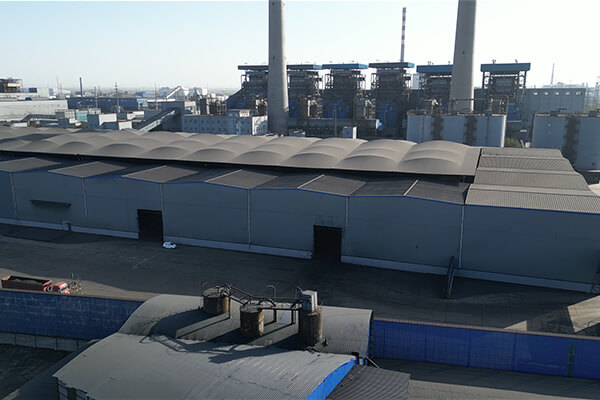
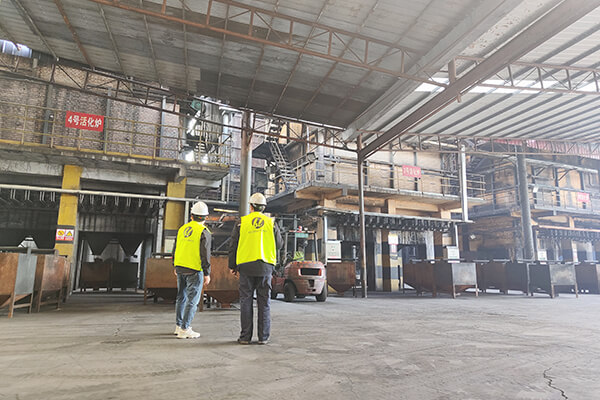
Heycarbons has sufficient inventory and strong production capacity, and will report production progress to you from time to time.
Shipping
Heycarbons know you need to receive the product as soon as possible, after rigorous quality checks and protective packaging, by fedex shipping.
Custom Heycarbons Premium TiO2 Impregnated Activated Carbon
Heycarbons has been committed to providing high-quality activated carbon to the spirits industry since 2005. Heycarbons can customize TiO2 impregnated activated carbon solutions for your project.
- Heycarbons customized package to promote your brand, and free design service.
- Customized raw material, size, iodine value, ash, methylene blue, moisture, specific surface area, etc.
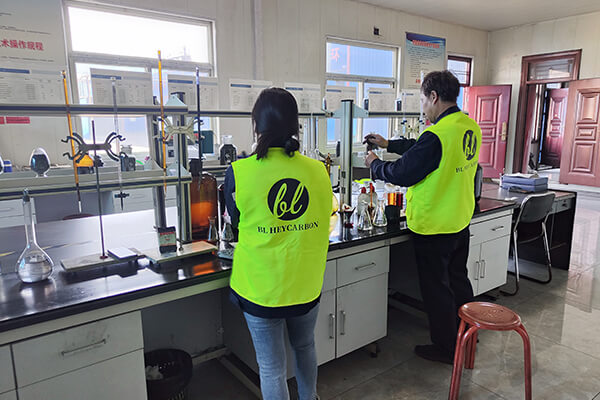
- Each batch of activated carbon undergoes multiple mixing tests to ensure quality. It also supports any form of third-party testing for customers.
Call Us
+86-180 3788 5195
Our Email
info@heycarbons.com



Are You Looking for TiO2 Impregnated Activated Carbon Suppliers?
Contact us for design assistance, free quote, and expert advice today.
Your inquiry will be replied within 24 working hours, and Heycarbons respect your privacy.