Activated Carbon for Lithium Battery
Activated carbon can be used as a conductive porous carbon framework, sulfur host material, electrode additive, or composite carbon matrix in lithium-ion and lithium-sulfur battery systems.

Activated Carbon for Lithium Battery Introduction
As lithium-ion battery technology advances toward higher energy density, faster charging speeds, longer cycle life, and enhanced safety, carbon materials are playing an increasingly important role in electrode design and interface engineering.
By virtue of its well-developed porous structure, high specific surface area, tunable surface chemical properties, and excellent chemical stability, activated carbon serves as a functional carbon material in lithium-ion and lithium-sulfur battery systems.
It serves not merely as a traditional adsorbent, but can also function as a porous conductive scaffold, electrode additive, sulfur host, or composite carbon-based material to enhance ion transport, electrolyte wettability, and electrode structural stability.
Heycarbons provides coconut shell activated carbon materials featuring controllable pore structures, low ash content, high purity, and customizable particle sizes, for use in the R&D and industrial applications of advanced battery materials.
What is Activated Carbon Used for in Lithium Batteries?
As a Conductive / Porous Carbon Additive
Activated carbon can be incorporated into electrode systems to facilitate the formation of a conductive network and enhance electron transport.
While the electrical conductivity of activated carbon does not match that of conductive carbon black, graphene, or carbon nanotubes, its primary function leans more towards serving as a porous conductive carbon support.
Its porous structure facilitates electrolyte penetration and improves electrolyte wetting. Furthermore, activated carbon helps establish electronic pathways between active materials, thereby boosting overall conductivity; it also serves to mitigate pulverization and buffer structural stress within expansion-type anodes, such as those based on silicon or tin.
As Anode (Modification) Materials for Lithium-ion Batteries
Activated carbon can store lithium to some extent, but its lithium storage mechanism differs from that of graphite.
In graphite anodes, lithium ions mainly intercalate into the graphite layers to form compounds such as LiC₆. In activated carbon, lithium storage is more related to surface adsorption, pore filling, defect sites, and surface functional groups.
However, when activated carbon is used directly as the main anode material, its very high specific surface area may lead to excessive SEI formation, high irreversible capacity loss, low initial Coulombic efficiency, and relatively low volumetric energy density.
Therefore, in practical applications, activated carbon is primarily utilized in composite anodes rather than serving as a substitute for graphite.
As Sulfur Hosts for Lithium–Sulfur Batteries
Sulfur itself exhibits poor electrical conductivity, and during the discharge process, it generates lithium polysulfides—species that are prone to dissolution and migration, thereby giving rise to the “shuttle effect.”
In contrast, the porous structure of activated carbon serves to disperse the sulfur within its pore channels; this enhances electron transport within the sulfur cathode, thereby improving its electrical conductivity, while simultaneously inhibiting the dissolution of lithium polysulfides. Ultimately, this strategy mitigates the loss of active material and significantly improves cycling stability.
Therefore, in lithium-sulfur batteries, a common structure is the Sulfur / Activated Carbon Composite Cathode.
Furthermore, for lithium-sulfur batteries, an ideal activated carbon should not rely only on micropores. Instead, a balanced pore structure is preferred: micropores help confine sulfur and polysulfides, mesopores facilitate ion transport, and macropores improve electrolyte access and mass transfer.
For Lithium-ion Capacitors (LIC)
The LIC is a hybrid energy storage device: its positive electrode employs a capacitive energy storage mechanism, while its negative electrode utilizes a lithium-ion battery-type mechanism involving the intercalation and deintercalation of lithium.
In an LIC, activated carbon serves as a pivotal positive electrode material; it primarily stores energy through the adsorption and desorption of electrolyte ions on the surfaces of its porous channels. Its primary function is to fulfill the role of capacitive energy storage.
Coconut shell activated carbon possesses a well-developed microporous structure and a high specific surface area, resulting in a strong ion adsorption capacity. It is characterized by high purity and cleanliness. If necessary, it can undergo acid-washing treatment to reduce impurities and enhance electrical conductivity. All these characteristics contribute to capacitive energy storage.
However, for LIC cathodes, a higher iodine value is not necessarily better; of greater importance is the pore structure’s accessibility to the electrolyte anions.
If the micropores are excessively narrow, anion diffusion becomes restricted, resulting in a decrease in actual capacitance utilization. Consequently, the activated carbon used in LICs typically requires a synergistic pore structure that balances energy storage within micropores with ion transport through mesopores.
Heycarbons Coconut Shell Activated Carbon for Lithium Battery

Heycarbons can provide battery-grade activated carbon for the manufacturing and production of lithium-ion batteries.
- Ash Content: ≤3% (≤1-2% after acid washing)
- Moisture Content: 3-5% max.
- Strength: 95-99.8% min.
- Low Metallic Impurities (Fe, Cu, Ni, Na, K etc.)
- Particle size customizable
Some lithium-ion battery manufacturers procure granular coconut-shell activated carbon to serve as a carbon material precursor or raw material for further processing, rather than directly purchasing powdered activated carbon. This is because the particle size, pore structure, surface functional groups, ash content, and electrical conductivity of standard powdered carbon may not necessarily meet the specific requirements of their electrochemical systems.
Why choose Heycarbons Activated Carbon for Lituium Battery?
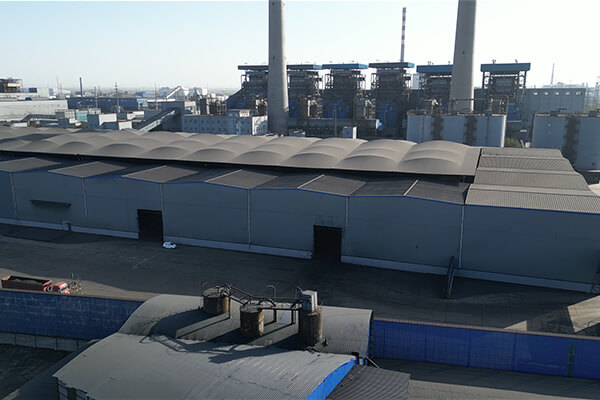
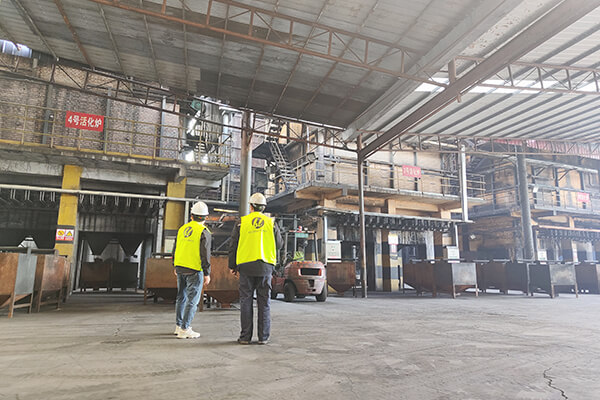
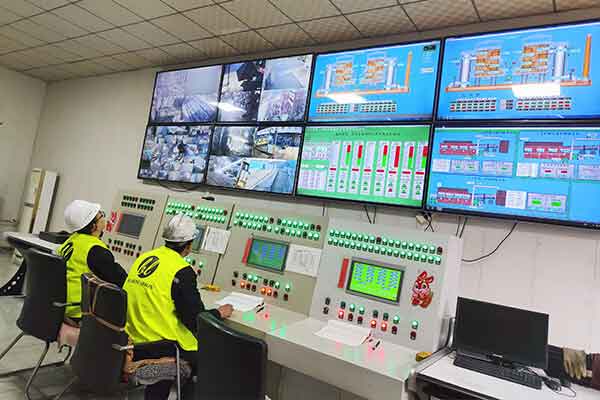
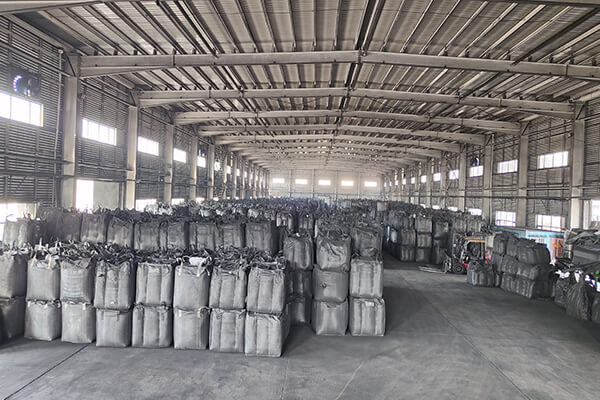
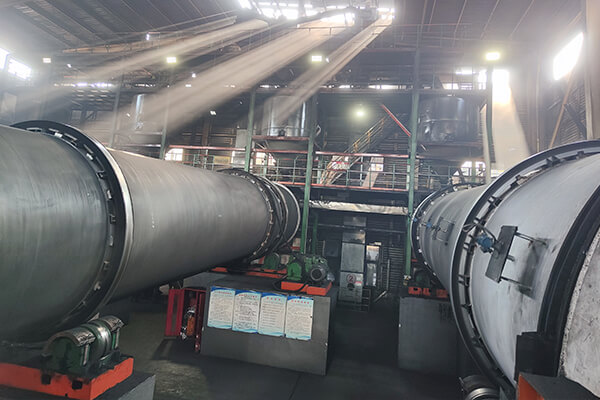
Heycarbons has been manufacturing activated carbon products since 2005. With our own factory and comprehensive production lines, we ensure both stable product quality and a reliable supply. We can directly provide lithium-ion battery-grade activated carbon characterized by low ash content, minimal metal impurities, and high hardness. Also offer customized particle sizes to meet your specific engineering requirements.
Further Reading: Activated Carbon as an Anode Material in Lithium-Ion Batteries
The applications of lithium-ion batteries are becoming increasingly widespread. During the battery’s charge-discharge cycles, lithium ions shuttle back and forth between the positive and negative electrodes; hence, they are referred to as “rocking-chair batteries.”
Typical cathode materials for lithium-ion batteries are metal oxides with a layered structure—such as lithium cobalt oxide, lithium manganese oxide, and lithium iron phosphate—while typical anode materials are layered graphitized carbon materials.
During the charging and discharging process, lithium ions intercalate into the interstitial spaces between the atomic layers of the active materials (positive and negative electrode materials) or deintercalate from them.
Activated carbon with a high degree of graphitization can be utilized as an anode material for lithium-ion batteries, enabling the reversible intercalation and deintercalation of lithium ions.
Custom Heycarbons Activated Carbon for Lithium Battery
Heycarbons provides professional activated carbon solutions at competitive prices.
Custom Premium Activated Carbon for Lithium Battery from China
Heycarbons has been committed to providing high-quality activated carbon for lithium battery since 2005. Heycarbons can customize activated carbon solutions for your project.
- Customized size, iodine value, ash, methylene blue, moisture, specific surface area, etc.
- Heycarbons customized package to promote your brand, and free design service.
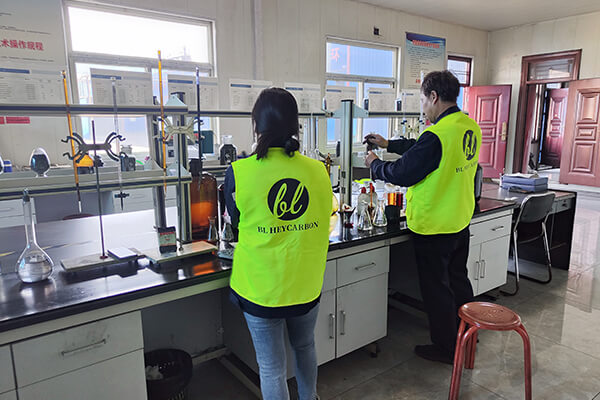
- Each batch of activated carbon undergoes multiple mixing tests to ensure quality. It also supports any form of third-party testing for customers.
Call Us
+86-180 3788 5195
Our Email
info@heycarbons.com
Reliable carbon from China, with confidence — Choose Heycarbons
Steps to Custom Heycarbons Activated Carbon for Lithium Battery
Consultation
By understanding your needs and requirements, our salesmen work with you to submit the appropriate activated carbon solution.
Quotation
Heycarbons expert customer service will provide you with a free quote based on your requirements as well as product specifications and quantities.
Production
Heycarbons has sufficient inventory and strong production capacity, and will report production progress to you from time to time.
Shipping
Heycarbons know you need to receive the product as soon as possible, after rigorous quality checks and protective packaging, by fedex shipping.


Are You Looking for Activated Carbon Supplier for Lithium Battery in China?
Contact us for design assistance, free quote, and expert advice today.
Your inquiry will be replied within 24 working hours, and Heycarbons respect your privacy.