Activated Carbon Pellets VS Granules VS Powder Heycarbons Manufacturer From China
Activated Carbon Pellets VS Granules VS Powder Production Process
Granular Activated Carbon Production Process
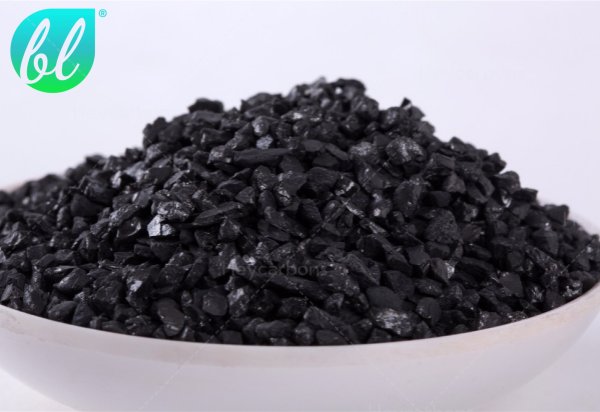
Granular activated carbon is a granular porous material produced by carbonizing and activating raw materials such as coal, coconut shells, or wood, followed by crushing and screening.
Common granular activated carbon sizes include 4*8, 5*10, 6*12, 8*16, 8*30, 12*40, 30*60, and 80*150 mesh.
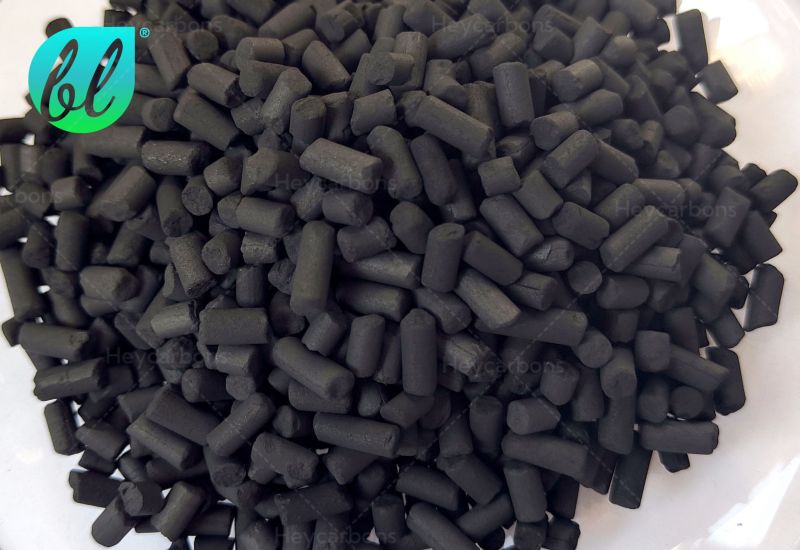
Pelletized Acticated Carbon Production Process
Pelletized activated carbon is a columnar porous material formed by grinding raw materials such as coal, coconut shell, or wood into powder, binding them with an adhesive, extruding under high pressure, and then carbonizing and activating. The use of the adhesive results in high strength of extruded activated carbon.
Common diameters for pelletized activated carbon include 0.9, 1.5, 2, 3, 4, 5, 6, 8 mm.
Among them, coal-based columnar activated carbon adopts coal blending technology, enabling flexible adjustment of parameters such as methylene blue, ash content, molasses value, iodine value, and CTC according to specific requirements.
In comparison, the parameters of granular activated carbon remain relatively fixed due to its fixed raw materials and production process.
Moreover, coal reagglomerated granular activated carbon also employs coal blending technology, allowing parameters to be adjusted according to different specification requirements.
Powdered Activated Carbon Production Process
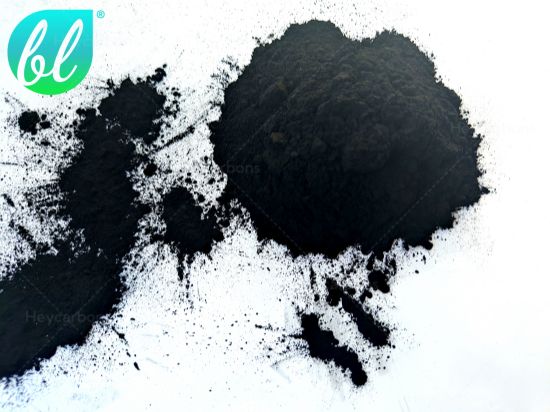
Powdered activated carbon is a highly porous adsorbent material made from high-quality coal, wood or coconut shell, which are carbonized, activated and then ground into powder.
The largest particle size of powdered activated carbon is 80-150 mesh, with common sizes including 200, 325 mesh.
You will get a quote in 24 hours
You will get a quote in 24 hours
Pellet VS Granule VS Powder Activated Carbon Advantages and Disadvantages
Pelletized Activated Carbon Features
Pelletized activated carbon is characterized by high strength, minimal pulverization, excellent wear resistance, but the price is higher.
For gas treatment applications, columnar activated carbon has a fixed length and diameter, ensuring uniform shape, stable airflow. The pressure drop is low and remains constant within a certain range, with minimal fluctuation.
Columnar activated carbon is suitable for impregnation and catalysis. Depending on the target substance, activated carbon can be impregnated with acidic, alkaline, or metal oxides.
Granular Activated Carbon Features
Granular activated carbon is not as strong as pellets, but it is cheaper and has a cost advantage.
GAC production process doesn’t use adhesive, making it safe and suitable for food and beverage applications.
Granular activated carbon is also suitable for impregnation and catalysis. Depending on the target substance, activated carbon can be impregnated with acidic, alkaline, or metal oxides.
What is the Difference between Activated Carbon Pellets and Granules VS Powder?
In gas treatment, commonly particle sizes for granular activated carbon include 4*8, 5*10, and 6*12 mesh. GAC’s advantage in gas treatment is its cost-effectiveness. Pelletized activated carbon’s advantages lie in its high strength and high CTC value.
Compared to the single-use nature of powdered activated carbon, granular and pelletized activated carbon can be reused multiple times through thermal regeneration, extending their service life and reducing the long-term cost benefits. To obtain activated carbon regeneration process flow, please click the link below to contact Heycarbons.
In terms of CTC, pelletized activated carbon can reach as high as 100-110, while granular activated carbon only reaches a maximum of 60. Reaggregated granular activated carbon can achieve 80-90 at best, but its price is relatively high. So all other things being equal, pelletized activated carbon is a better choice than reagglomerated activated carbon.
Powdered Activated Carbon Features
Powdered activated carbon has a high specific surface area, a fast reaction rate, and is inexpensive.
The methylene blue value of wood powder can be achieved at a very high level, up to 320 mg/g.
Better decolorization effect.
Activated carbon powder is difficult to recycle and cannot be reused, unlike granular or columnar activated carbon which can be regenerated thermally.
Powdered activated carbon is not as good at filtering as GAC (granular activated carbon) and is more likely to leave residue.
You will get a quote in 24 hours
You will get a quote in 24 hours
Activated Carbon Granules VS Pellets VS Powder Application
Pelletized Activated Carbon Application
Pelletized activated carbon has high mechanical strength and is not easily pulverized. Its bed pressure drop is low, making it particularly suitable for applications requiring large air volumes and low resistance. Therefore, it is often used for continuous high flow gas operation.
Anthracite/bituminous coal pelletized activated carbon can be used for H2S removal and VOCs gas treatment, and is also the first choice for biogas purification.
Extruded activated carbon can also be used for solvent recovery:
- Wood-based extruded activated carbon typically has a high specific surface area and a well-developed mesoporous structure, making it suitable for adsorbing macromolecular solvents.
- Coconut shell pelletized activated carbon has low ash content and high mechanical strength, making it suitable for high purity requirements and multiple regeneration systems.
- Coal-based pelletized activated carbon has a significant cost advantage and offers good cost-effectiveness.
Customers can choose the appropriate activated carbon type based on their specific requirements.
In addition, pelletized activated carbon can also be used for PSA nitrogen production, desulfurization and denitrification, and industrial waste gas treatment. For pelletized activated carbon specification and more detailed information… https://heycarbons.com/pelletized-activated-carbon/
Granular Activated Carbon Application
For water treatment, molecules diffuse slowly in water, and pollutants diffuse slowly. Compared to columnar activated carbon, granular activated carbon has a smaller particle size and a larger contact area, especially coconut shell activated carbon, which has well-developed micropores. Therefore, in water treatment, granular activated carbon has a faster and more uniform adsorption efficiency. Granular activated carbon is more suitable for liquid-phase adsorption.
Coconut shell granular activated carbon works for gold extraction and for removing residual chlorine from drinking water.
Coal-based granular activated carbon is used for removing COD, BOD, heavy metals and PFAS from industrial wastewater treatment, as well as for amine treatment and water filtration.
In water treatment, coal-based granular activated carbon can serve applications in waterworks and filter cartridges for community water dispensing stations.
Reaggregated coal activated carbon suits the decolorization of food, sugar, and oil.
For granular activated carbon specification and more detailed information… https://heycarbons.com/granular-activated-carbon/
What is the Difference between Granular and Pelletized Activated Carbon?
Additionally, pelletized activated carbon with diameters of 1.5mm and 2mm can also be used for water treatment. It features high strength and excellent wear resistance and produces almost no carbon powder during backwashing, thus avoiding secondary pollution.
Pelletized activated carbon can also be used in water treatment, but it’s not as commonly used as GAC. Granular activated carbon has a specific particle size distribution range, such as 6*12 mesh or 8*10 mesh, with coarse and fine particles coexisting.
In contrast, columnar activated carbon has a fixed diameter, although its length varies, its overall particle size distribution is not as uniform as granular activated carbon. The mixing of coarse and fine particles in GAC allows for better control of water flow rate. Furthermore, due to its wider particle size range, the gaps between particles are more reasonable, which actually increases the contact area between water and activated carbon, resulting in superior filtration.
If the customer has requirements for strength, size range, and flow rate target, columnar crushed activated carbon can be used for water treatment. Columnar crushed granular activated carbon is produced by mechanically crushing and screening columnar activated carbon.
Powdered Activated Carbon Application
Wood powdered has a larger pore size and its methylene bluecan achieve a very high level, making it suitable for food decolorization or food and beverages with a darker color.
In water purification, coal-based powder activated carbon is mostly used in sewage treatment and industrial wastewater treatment.
Coal-based powdered activated carbon can also be used for flue gas from steel plants and waste incineration exhaust gas.
For granular activated carbon specification and more detailed information… https://heycarbons.com/powdered-activated-carbon/
What is the difference between PAC and GAC?
In water purification, coal-based powder activated carbon is mostly used in sewage treatment and industrial wastewater treatment. While coal-based granular activated carbon can serve applications in waterworks and filter cartridges for community water dispensing stations.
Heycarbons has long been focused on providing innovative and efficient activated carbon solutions, committed to meeting the diverse needs of clients across various industries. We precisely select the appropriate activated carbon raw materials, product forms and parameters based on actual application scenarios, ensuring customers achieve ideal application results.
You will get a quote in 24 hours
You will get a quote in 24 hours
Steps to Custom Heycarbons Activated Carbon Pellets VS Granules VS Powder
Consultation
By understanding your needs and requirements, our salesmen work with you to submit the appropriate activated carbon solution.
Quotation
Heycarbons expert customer service will provide you with a free quote based on your requirements as well as product specifications and quantities.
Production
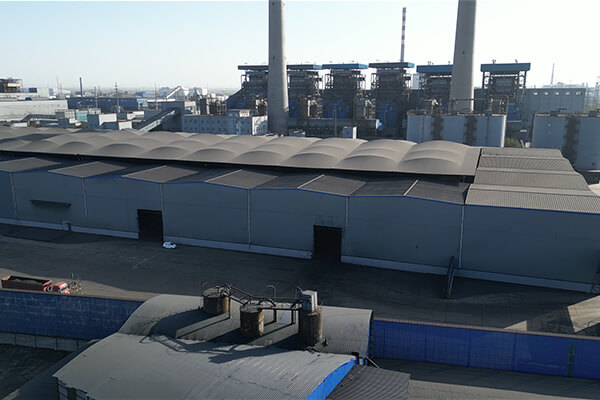
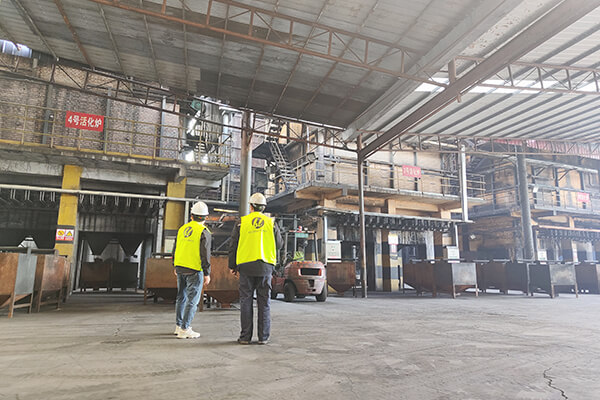
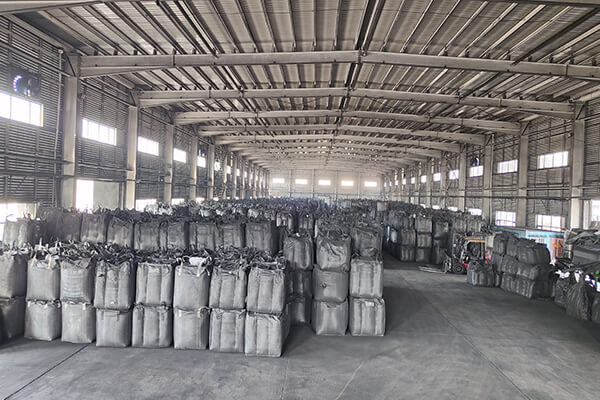
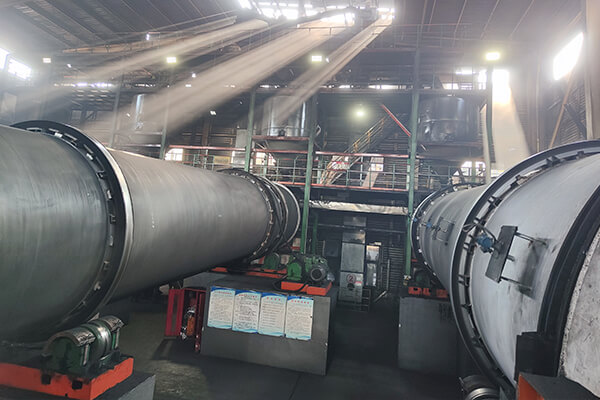
Heycarbons has sufficient inventory and strong production capacity, and will report production progress to you from time to time.
Shipping
Heycarbons know you need to receive the product as soon as possible, after rigorous quality checks and protective packaging, by fedex shipping.
Custom Heycarbons Activated Carbon Pellet VS Granule VS Powder
Heycarbons has been committed to providing high-quality activated carbon since 2005. Heycarbons can customize activated carbon solutions for your business project.
- Heycarbons customized package to promote your brand, and free design service.
- Customized raw material, size, iodine value, ash, methylene blue, moisture, specific surface area, etc.
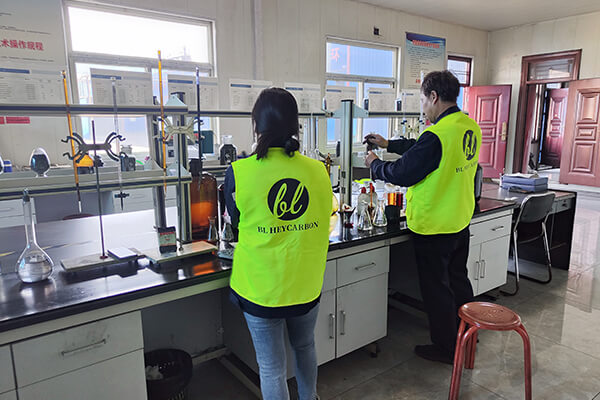
- Each batch of activated carbon undergoes multiple mixing tests to ensure quality. It also supports any form of third-party testing for customers.
Call Us
+86-180 3788 5195
Our Email
info@heycarbons.com

Are You Looking for Pellets VS Granules VS Powder Activated Carbon Suppliers?
Contact us for design assistance, free quote, and expert advice today.
Your inquiry will be replied within 24 working hours, and Heycarbons respect your privacy.
You will get a quote in 24 hours