Heycarbons Activated Carbon For Mine Wastewater Manufacturer From China
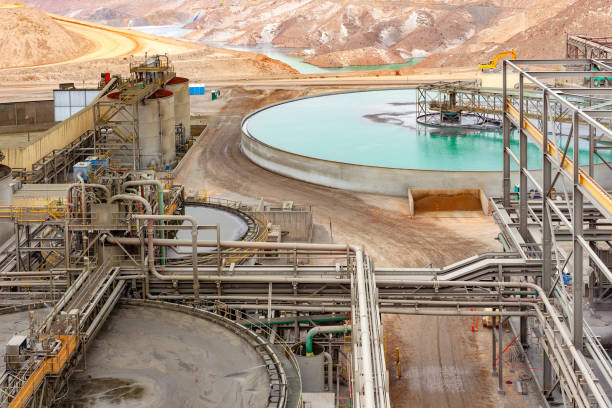
Why does Mine Wastewater Need to Be Treated?
Mine wastewater treatment is not an “optional environmental measure,” but a fundamental step for mines to achieve compliant production and long-term stable operation.
From a regulatory perspective, most countries and regions have strict limits on mine wastewater discharge. Heavy metals, COD, sulfides, and cyanides are key monitored indicators. Exceeding these limits often leads to direct risks such as production shutdowns, fines, and even the revocation of discharge permits.
From an environmental and long-term risk perspective, heavy metals are non-degradable in water bodies and sediments. Acid mine wastewater (AMD) can damage aquatic ecosystems for years or even decades, causing irreversible pollution to downstream farmland and groundwater.
At the production and operation level, substandard recycled water can exacerbate equipment corrosion and scaling, leading to process fluctuations. This is especially true in closed-loop systems, where water quality stability is paramount. Therefore, advanced wastewater treatment at the end of the line often serves as a “safety net” to ensure the safe operation of the system.
Essentially, mine wastewater treatment is not an additional cost, but an integral part of achieving compliance, risk reduction, and stable continuous production for mining companies.
What pollutants need to be removed from mine wastewater?
Different mineral types vary greatly, common pollutants include heavy metals, organic pollutants, sulfur-containing pullutants, cyanides, etc. Details of the different pollutants are as follows::
Heavy Metals
- Common: Pb, Cd, Hg, As, Cu, Zn, Ni, Cr
- Mainly originates from ore leaching and tailings leachate
- Characteristics: High toxicity, non-biodegradable, highly volatile, strict limits
Organic Pollutants
- Residues from mineral processing reagents: collectors, frothers, inhibitors
- High COD and TOC, poor biodegradability
Sulfur-Containing Pollutants
- H2S, sulfides (S²⁻)
- Thiosulfates, sulfates
- Commonly found in acidic mine wastewater (AMD)
Cyanides and their complexes
- Free cyanide
- Metal cyanide complexes (Cu–CN, Fe–CN)
Why is Activated Carbon Used in Mine Wastewater Treatment?
For mine wastewater, conventional treatment processes mainly involve sedimentation, coagulation, biological treatment, and neutralization. These can address most issues, but there are always pollutants that conventional processes cannot remove or that are unstable. Activated carbon is precisely designed to solve these “last 5% problems.”
The main target contaminants in mine wastewater include heavy metals (As, Hg, Pb, Cd, etc.), sulfur compounds, cyanides, and organic reagents used in mineral processing. Activated carbon primarily plays a crucial role in the deep removal of heavy metals and mineral processing reagents. It is an important backup unit to ensure long-term stable compliance with effluent standards, rather than a primary treatment process to rely on alone.
As the final stage of the treatment process, the core function of the activated carbon step is to “fine-tune” the effluent after the previous treatment.
It deeply adsorbs and removes residual trace pollutants in the water, further reducing indicators that are already close to emission limits or standard limits to safe ranges, ensuring stable and reliable final effluent quality that meets high standards.
Activated carbon specifically targets trace pollutants and sensory indicators that are difficult to completely remove, mainly including:
- Trace heavy metals: such as arsenic (As), mercury (Hg), and hexavalent chromium (Cr(VI)), further reducing their concentration from the microgram per liter (μg/L) level.
- Organic residues: residual chemical oxygen demand (COD) or total organic carbon (TOC), reducing organic matter content to even lower levels.
- Sensory indicators: removing residual color and odor in the water, improving water clarity and sensory quality.
Heycarbons Activated Carbon For Mine Wastewater Treatment
For mine wastewater treatment, the main types of activated carbon used are coal-based granular activated carbon and coal-based powdered activated carbon.
If customers require the removal of heavy metals or mercury, modified activated carbon (acid-impregnated activated carbon or sulfur-loaded activated carbon) can be selected.
Coal Granular Activated Carbon for Mine Wastewater Treatment
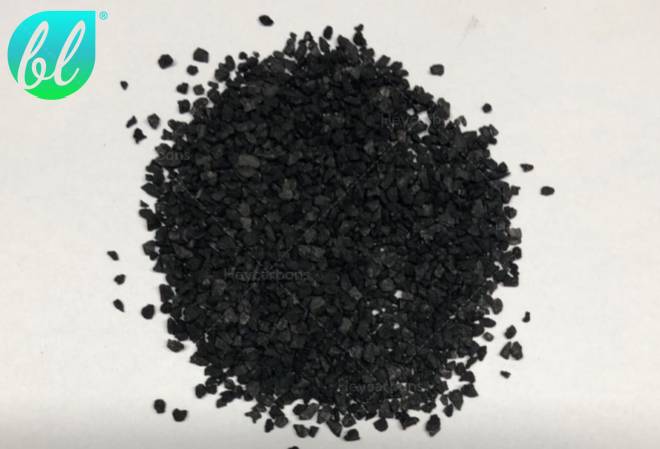
Coal-based granular activated carbon has a wide pore size distribution and abundant mesopores, making it suitable for adsorbing medium-molecular-weight organic mineral processing reagents. It effectively removes COD, organic matter, and some heavy metals.
Coal-based granular activated carbon possesses high mechanical strength, allowing it to withstand repeated rinsing in filter tanks without easily breaking.
Due to its cost-effectiveness and durability, coal-based granular activated carbon is the most widely used choice for mine wastewater treatment.
Heycarbons provides the following parameters for coal-based granular activated carbon for your reference:
The following parameters are provided for your reference regarding activated carbon used for organic matter/COD removal:
- Coal granular activated carbon
- Size: 8*30, 12*40 mesh
- Iodine value: 900-1100mg/g
- Methylene blue: ≥150 mg/g
- Specific surface area: 900–1100 m²/g
- Strength: ≥95%
- Ash content: ≤10%,15%
Coal Powdered Activated Carbon for Mine Wastewater Treatment
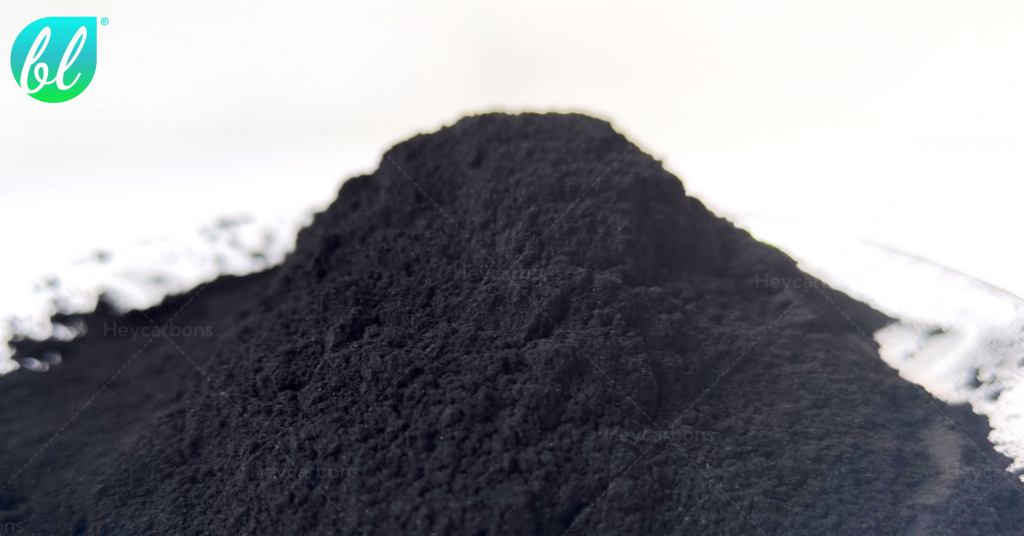
Powdered activated carbon (PAC) from coal has an extremely large specific surface area and a very fast adsorption rate, making it primarily used for emergency or intermittent treatment of mine wastewater.
It requires no fixed equipment and offers flexible addition. It can be directly added to the reaction tank, where it is stirred to ensure thorough contact with the wastewater, and then settled and removed along with the sludge. This makes it suitable for applications requiring rapid response to fluctuations in water quality.
Heycarbons provides the following specifications for coal powdered activated carbon for your reference:
- Coal-based powdered activated carbon
- Iodine value: 500-1100mg/g min.
- Moisture content: 10% max.
- methylene blue: 120-150mg/g
- pH: 8-11
- Ash: 8-20%
Impregnated Activated Carbon for Mine Wastewater Treatment
For specific metal ions such as antimony (Sb) and lead (Pb), acid-impregnated activated carbon can be used, such as activated carbon impregnated with phosphoric acid (H3PO4), nitric acid (HNO3), or hydrochloric acid (HCl). For common metal ions, ordinary activated carbon is sufficient. Detailed explanations will not be provided here; please refer to the following:
https://heycarbons.com/activated-carbon-for-heavy-metal/
To remove mercury from mine wastewater, sulfur-impregnated activated carbon is required. For more information on the parameters, chemical reactions, and working principles of sulfur-impregnated activated carbon, please click and read the article below:
How to Select Activated Carbon for Different Mining Wastewater?
Different mineral types directly lead to differences in metal ion systems, reagent systems, and pH/sulfur systems.
Choosing the right activated carbon should not be based solely on iodine value. It is recommended to follow this logic:
Determine the type of pollutant (heavy metals/mineral processing reagents/sulfur systems/cyanides, etc.) → Determine the carbon’s “function” (physical adsorption or impregnation/modification) → Determine the shape and operating mode (powdered/granular).
Next, we will analyze the water quality characteristics and suitable activated carbon types for different mineral types such as gold, copper, lead-zinc, and nickel.
Activated Carbon for Gold Mine Wastewater
Gold Mine Wastewater (especially from cyanide leaching processes) has a complex composition, primarily consisting of: CN⁻/WAD (CN), thiocyanate (SCN⁻), residual xanthate/foaming agent, and some metal complexes.
For this type of wastewater, the selection of activated carbon needs to be targeted: If the wastewater’s main problems are residual organic reagents and COD, coal granular activated carbon with high adsorption capacity, especially well-developed mesopores, is recommended. In this case, priority should be given to its molasses value or methylene blue adsorption value, as these two indicators more sensitively reflect its ability to remove medium molecular weight organic matter.
If deep treatment of heavy metals such as arsenic (As) and mercury (Hg) is required, specially impregnated activated carbon should be selected. For example, iron-based impregnated carbon is effective for arsenic removal, while sulfur-impregnated carbon excels at mercury removal.
It is particularly important to emphasize that activated carbon plays a key role in the deep purification of cyanide-containing wastewater. To ensure treatment effectiveness and operational safety, it is usually necessary to first perform cyanide-breaking pretreatment through chemical oxidation (such as alkaline chlorination) and then combine it with activated carbon adsorption for subsequent deep polishing and protection.
Activated Carbon for Copper Mine Wastewater
Wastewater from copper mines/polymetallic sulfide ores (Cu-Zn-Pb, etc.) has a complex and variable composition. This type of wastewater typically contains high concentrations of copper, zinc, and lead ions (Cu²⁺/Zn²⁺/Pb²⁺), as well as sulfides, thiosalts, and residual flotation reagents (such as xanthates, black reagents, and frothers), and its pH value is prone to fluctuation.
In treating this type of wastewater, activated carbon generally plays two main roles:
First, for color and COD problems caused by flotation reagents and organic matter, coal-based granular activated carbon with a well-developed mesoporous structure is recommended.
This type of activated carbon not only has a strong adsorption capacity for medium molecular weight organic pollutants but also has high mechanical strength and resistance to water quality shocks, effectively addressing potential load fluctuations from upstream processes at a relatively affordable cost.
Secondly, for deep treatment of metal ions, a more economical and effective standard process is recommended: chemical precipitation (adding lime + sulfidation/flocculation) reduces the concentration of most metal ions to a low level; then, ordinary activated carbon is used as a bottom layer to mainly adsorb trace metal complexes and organic impurities remaining after precipitation.
Only when special pollutants are entrained in the wastewater (such as associated arsenic (As)) should it be considered to add special activated carbon such as iron-based impregnated carbon at the end for targeted capture.
Activated Carbon for Lead-Zinc Ore Wastewater
For lead-zinc ore beneficiation wastewater (mainly Pb/Zn, often with Cd), the core characteristics are high and fluctuating concentrations of Pb, Zn, and Cd heavy metal ions. Even after conventional flocculation and sedimentation treatment, trace amounts of heavy metal “tails” and residual reagents may still exist in unstable concentrations in the effluent.
In this scenario, it is recommended to use high-mechanical-strength, low-pulverization-rate granular activated carbon in a fixed-bed configuration as a unit for deep treatment. This synergistically removes residual trace metal complexes and organic components such as flotation reagents after sedimentation, thereby stabilizing the effluent quality.
It is particularly important to note that if emission standards impose extremely strict limits on cadmium and its concentration fluctuates significantly, it is recommended to use a core process of “high-efficiency precipitation (such as combined with sulfidation) + ion exchange or specialized adsorption media.” Activated carbon can then be used for terminal purification to further ensure water quality.
To learn more about the use of activated carbon in lead-zinc mine wastewater treatment, please click and read the article below:
https://heycarbons.com/activated-carbon-for-lead-zinc-mine-wastewater/
Activated Carbon for Nickel-Cobalt Ore/Laterite Nickel Ore Wastewater
Wastewater from nickel-cobalt ore/laterite nickel ore (especially that treated using the high-pressure acid leaching (HPAL) process) is characterized by high acidity, high SO₄²⁻, rich in nickel, cobalt, manganese, and iron (Ni/Co/Mn/Fe) ions, and may carry trace amounts of organic extractants. In the treatment of this type of wastewater, the application of activated carbon requires particular caution and a clear purpose.
The first and crucial step is to pre-adjust the pH of the wastewater to a suitable range of neutral or near-neutral. Directly passing highly acidic wastewater through an activated carbon bed will drastically shorten the carbon’s lifespan and significantly increase the risk of dust and color in the effluent due to carbon dissolution.
After pH adjustment and the main sedimentation/flocculation processes, the core role of activated carbon is mainly reflected in two aspects:
For trace amounts of organic extractants or solvents that may remain in the wastewater, it is recommended to use coal-based granular activated carbon with well-developed mesopores and strong adsorption capacity for larger organic molecules, which can effectively remove related organic matter and color.
For deep purification of metal ions, it is still necessary to rely on the upstream sedimentation/flocculation process to reduce the metal concentration to a low level. The activated carbon bed is then used for subsequent fine filtration, mainly for the final treatment of residual trace organic-metal complexes and color.
Therefore, the golden rule for treating this type of wastewater is: neutralize first, then adsorb. Activated carbon plays a crucial role in final-stage deep purification and protection under suitable chemical conditions.
Activated Carbon for Coal Mine/Coking Related Mining Areas Wastewater
Wastewater from coal mines/coking plants (especially the common acidic mine wastewater) is typically characterized by low pH, high concentrations of iron/manganese/aluminum, and high sulfate levels. If compounded by coal chemical processes, it may also contain phenols and polycyclic aromatic hydrocarbons (PAHs). In this scenario, the application of activated carbon must be strictly differentiated based on the treatment objectives.
However, when the wastewater contains added organic pollutants such as phenols and PAHs from coking or chemical processes, coal-based granular or columnar activated carbon is recommended. After inorganic precipitation, it is specifically used to efficiently remove residual dissolved organic matter, discoloration, and odor, ensuring the sensory indicators and ecological safety of the effluent.
It is important to note that if the wastewater problem is simply high sulfate, activated carbon is largely ineffective, and specialized processes such as reverse osmosis, evaporative crystallization, or biological reduction must be relied upon. Therefore, in coal mine wastewater treatment, activated carbon’s precise role is that of a “scavenger” of organic pollutants after inorganic pretreatment, rather than a broad-spectrum solution for dealing with acidic and high-salt matrices.
Custom Heycarbons Activated Carbon Solution For Mine Wastewater
Heycarbons provides a full range of activated solutions at competitive prices.

Custom Heycarbons Activated Carbon For Mine Water treatment
Heycarbons has proudly served the activated carbon industry with high-quality products since 2005, we can customize activated carbon for your mining project.
- Personalized service and advice based on your needs and preferences. Different raw materials for different applications.
- Customized size, iodine value, methylene blue, PH, ash, etc.
- Heycarbons customized package to promote your brand, and free design service.
Call Us
+86-180 3788 5195
Our Email
info@heycarbons.com
Steps to Custom Heycarbons Activated Carbon For Mine Wastewater
Consultation
By understanding your needs and requirements, our salesmen work with you to submit the appropriate activated carbon solution.
Quotation
Heycarbons expert customer service will provide you with a free quote based on your requirements as well as product specifications and quantities.
Production
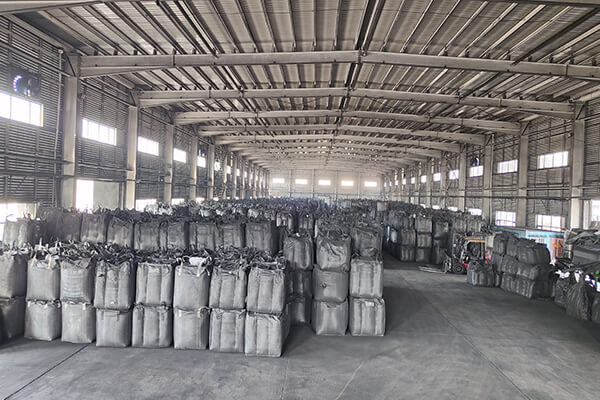
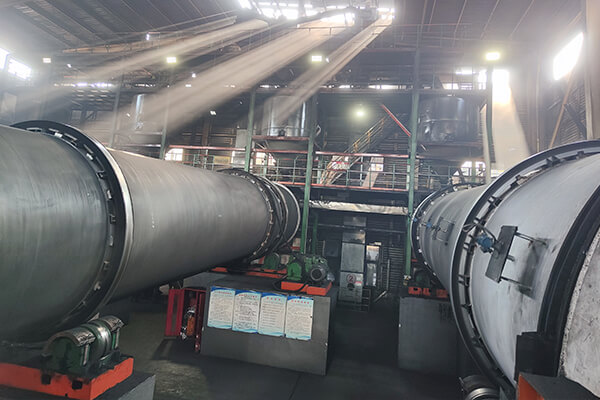
Heycarbons has sufficient inventory and strong production capacity, and will report production progress to you from time to time.
Shipping
Heycarb know you need to receive the product as soon as possible, after rigorous quality checks and protective packaging, by fedex shipping.
Are You Looking for Activated Carbon Manufacturers for Mine Wastewater?
Contact us for design assistance, free quote, and expert advice today.
Your inquiry will be replied within 24 working hours, and we respect your privacy.