Activated Carbon for Lithium Purification: Heycarbons Manufacturer From China
Table of Contents
- Why Use Activated Carbon for Lithium Purification?
- Heycarbons Activated Carbon Products for Lithium
- How to Purify Lithium Using Activated Carbon?
Why Use Activated Carbon for Lithium Purification?
With the rapid development of the power battery and energy storage industries, the demand for lithium, as a key raw material, is continuously rising. Currently, there are two main paths for lithium resource development: one is the mining of hard rock deposits, represented by spodumene, and the other is the extraction of lithium resources from salt lake brines.
Regardless of the path chosen, obtaining high-purity lithium salts (lithium carbonate or lithium hydroxide) inevitably requires a complex and rigorous purification process.
In actual production, purification step is often more complex than the initial extraction, and its impact on the final product quality and cost is more direct. Especially with increasingly stringent requirements for impurity content in battery-grade products, the importance of purification processes is becoming increasingly prominent.
In this process, activated carbon, as a material with a well-developed pore structure and excellent adsorption properties, can remove organic matter, pigments, and some metallic impurities from the solution, thereby improving the quality of the lithium solution. Simultaneously, it also helps improve the stability of subsequent separation processes and reduces the impact of process fluctuations.
Based on the above background, this paper will further analyze the selection of activated carbon, application scenarios and mechanisms of action in conjunction with different lithium extraction processes.

Heycarbons Activated Carbon Products for Lithium Purification
In lithium ore purification, various activated carbon products with different properties are often introduced to effectively remove impurities, improve solution quality, and ensure the purity of the final product.
Depending on the specific needs of different process stages, different types of activated carbon with varying particle size distributions and pore structures are typically selected.
As a professional activated carbon supplier, Heycarbons has provided customized products and technical support to numerous clients in lithium ore purification projects. The following are three types of activated carbon products used for clients, which have been validated by customers and demonstrate targeted adsorption and purification effects at different stages of the lithium extraction process.
Wood Powdered Activated Carbon for Lithium Purification

| Project | Specification |
|---|---|
| Size | 200 mesh |
| Iodine value | >850 mg/g |
| Ash content | ≤8% |
| Moisture content | ≤20% |
| Ca | ≤0.08% |
Wood-based powdered activated carbon is predominantly mesoporous, giving it a stronger adsorption capacity for pigments and other large organic molecules. Low cost, suitable for large-dose administration, but non-renewable. Wood PAC can also improve whiteness from industrial grade to battery grade and prevent crystals from yellowing.
Heycarbons wood-based powdered activated carbon has a Ca content ≤0.08%, avoiding Ca contamination, making it ideal for lithium systems.
Coconut Shell Granular Activated Carbon for Lithium Purification

| Project | Specification |
|---|---|
| Size | 20-80 mesh (pass rate ≥95%) |
| Iodine value | ≥1020 mg/g |
| Ash content | <3% |
| Moisture | <10% |
Heycarbons can also acid wash the granular activated carbon according to customer needs to reduce the ash content of coconut shell granular activated carbon to below 1%.
Heycarbons coconut shell granular activated carbon is developed for lithium ore purification processes. Its well-developed microporous structure is suitable for removing small-molecule organic matter and some impurities. The product has low ash content and high purity, meeting the cleanliness requirements of raw materials in battery-grade lithium salt production.
Apricot Shell Granular Activated Carbon for Lithium Purification
| Project | Specification |
|---|---|
| Size | 8-50 mesh (pass rate ≥95%) |
| Iodine value | ≥1000 mg/g |
| Moisture | ≤10% |
| Ash content | ≤5% |
| Specific gravity | 0.5-0.6 g/cm³ |
| Zinc | ≤5 μg/g |
| Strength | ≥90% |
In practical applications, apricot shell granular activated carbon is mainly used in lithium extraction processes from salt lake brine. Heycarbons apricot shell GAC has high strength, low cost, and Zn ≤ 5 μg/g, which will not cause heavy metal pollution to the lithium solution.
Heycarbons can also acid wash the granular activated carbon according to customer needs to reduce the ash content of apricot shell granular activated carbon to below 2%.
Heycarbons can customize the activated cartbon specification according to customer needs, optimizing the structure and performance parameters of activated carbon for different process conditions to achieve better lithium purification results.
How to Purify Lithium Using Activated Carbon?
The mechanisms of action and application steps of the various types of activated carbon in different lithium extraction processes are not the same.
The following section will focus on two major process routes: lithium extraction from ore and lithium extraction from salt lake brine. It will analyze the application of activated carbon in each stage and its key role in the quality of lithium products and the stability of the process.
Lithium extraction processes of ore
The general process for lithium extraction from ore is as follows: crushing → beneficiation → roasting (α→β conversion) → acid leaching (leaching lithium with sulfuric acid) → impurity removal → refining → crystallization.
Crushing and beneficiation: Through crushing, ball milling and flotation processes, collectors are used to selectively enrich spodumene to obtain lithium concentrate, increasing the lithium grade from less than 1% to about 4–6% Li₂O.
Roasting (α → β Conversion): Roasting at 1000-1100℃ transforms the dense and difficult-to-leach α-spodumene into the loosely structured and readily reactant β-spodumene, creating conditions for subsequent acid leaching.
Acid leaching: Lithium is converted from a solid phase to a soluble lithium sulfate solution using a sulfuric acid system.
Impurity removal: By adding lime to adjust the pH, impurities such as Fe³⁺ and Al³⁺ precipitate as hydroxides. At the same time, reagents such as sodium carbonate are used to further remove impurity ions such as Ca²⁺ and Mg²⁺.
Following this stage, wood-based powdered activated carbon is typically used for decolorization and organic matter removal. Its well-developed mesoporous structure facilitates the adsorption of large organic molecules and pigments, effectively removing flotation reagent residues, humic acid, and other impurities, reducing COD and APHA values, and improving solution transparency and subsequent process stability. Wood PAC can also remove residual color, enabling lithium liquid to achieve battery-grade whiteness.
After further purification treatment such as ion exchange, a high-purity lithium sulfate solution can be obtained.
Refining: Before crystallization, high-purity coconut shell granular activated carbon is typically used for deep purification. This type of activated carbon features low ash content, low metallic impurities (Fe, Ca, Mg, etc., reaching ppm levels), and a well-developed microporous structure, effectively removing trace organic matter and minor impurities, thus helping to meet the purity requirements of battery-grade lithium salt products.
Lithium Salt Preparation: By adding sodium carbonate, lithium sulfate is converted into lithium carbonate precipitate: Li₂SO₄ + Na₂CO₃ → Li₂CO₃↓ + Na₂SO₄.
Lithium hydroxide can be further prepared through causticization or other processes.
Crystallization and Drying: After crystallization, solid-liquid separation, and drying at 100–200℃, industrial-grade or battery-grade lithium carbonate or lithium hydroxide products are finally obtained.
Lithium extraction processes of brine
The typical process flow for extracting lithium from salt lake brine can be summarized as follows: brine → pretreatment → lithium enrichment (evaporation/adsorption/solvent) → lithium extraction (elution or back-extraction) → refining → crystallization.
Brine Acquisition and Pretreatment: Salt lake brines contain not only lithium but also large amounts of Na⁺, K⁺, Mg²⁺ (the main interfering ions), Ca²⁺, Cl⁻, SO₄²⁻, organic matter, and colloids. The lithium content is low, and the impurities are extremely complex. Therefore, pretreatment is necessary before lithium extraction.
First, silt and suspended solids are removed through filtration and sedimentation. Then, coconut shell/apricot shell granular activated carbon is used to remove organic matter, humic substances, and any remaining extractant, reducing COD, preventing crystallization contamination, and yielding a relatively clean raw brine.
Mg²⁺ and Ca²⁺ Removal: Mg²⁺ and Li⁺ have similar properties. A high magnesium-to-lithium ratio (Mg/Li) significantly increases the difficulty of lithium extraction. Some salt lakes have a Mg/Li ratio > 50, making them very difficult to process. Industrially, lime is typically added to preferentially remove Mg²⁺, followed by sodium carbonate to further remove Ca²⁺, ultimately yielding a low-magnesium brine suitable for lithium extraction.
Lithium Enrichment: Lithium enrichment and separation are the core steps in lithium extraction from salt lakes. Depending on resource endowment and technological conditions, different routes can be adopted, such as evaporation concentration, selective adsorption, or solvent extraction. Among them, evaporation achieves indirect lithium enrichment through fractional crystallization; adsorption relies on the selective adsorption of Li⁺ by lithium ion sieves and obtains a lithium-rich solution through elution; while solvent extraction selectively extracts Li⁺ through an organic phase and recovers lithium through back-extraction.
Refining: Before crystallization, the lithium-rich solution needs to be purified. First, wood-based powdered activated carbon with a predominantly mesoporous structure can be used for decolorization to remove macromolecular pigments, organic matter, and trace organic impurities from the solution.
After that, high-purity coconut shell granular activated carbon is used for deep purification. Due to its low ash content and well-developed microporous structure, it can effectively remove trace organic matter and trace impurities, thereby improving the purity of the solution and ensuring that the final lithium salt product meets battery-grade purity requirements.
Finally, by adding a precipitant (such as sodium carbonate), lithium is precipitated in the form of lithium carbonate. After crystallization, solid-liquid separation and drying, the target lithium salt product is obtained.
Conclusion
In summary, while activated carbon does not directly participate in the lithium extraction reaction, it plays a crucial role in impurity control and solution purification throughout the entire lithium extraction process. From ash content and pore structure to the content of metallic impurities, these indicators directly affect the quality of the final lithium salt product.
In practical applications, selecting the right activated carbon is often more important than it seems. Ensuring effective adsorption while avoiding the introduction of new impurities places high demands on the activated carbon product’s stability and purity control.
Professional Heycarbons activated carbon supplier continuously optimizes raw material selection and production processes, providing greater assurance in terms of activated carbon purity and structure control, and offering targeted solutions for different lithium extraction processes.
Heycarbons can also provide customized solutions for coal-based GAC, EAC, and PAC for wastewater and waste gas generated during lithium extraction from ore and brine in salt lakes. Please click the link below to contact the Heycarbons team if you have any needs.
Custom Heycarbons Activated Carbon for Lithium Purification
Heycarbons provides a full range of activated solutions at competitive prices.
Custom Premium Activated Carbon for Lithium Purification from China
Heycarbons has been committed to providing high-quality activated carbon since 2005. Heycarbons can customize activated carbon solutions for your lithium purification project.
- Customized raw material, size, iodine value, ash, methylene blue, moisture, specific surface area, etc.
- Heycarbons customized package to promote your brand, and free design service.
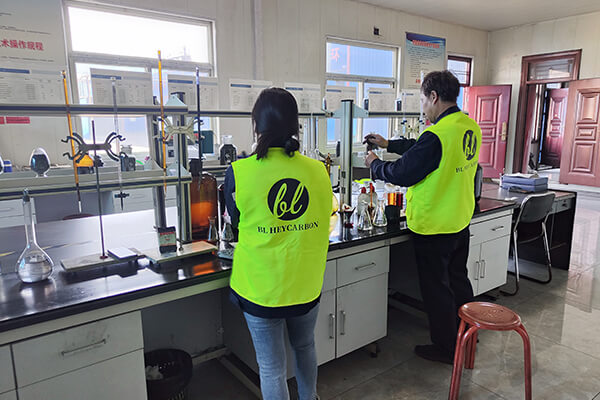
- Each batch of activated carbon undergoes multiple mixing tests to ensure quality. It also supports any form of third-party testing for customers.
Call Us
+86-180 3788 5195
Our Email
info@heycarbons.com
Steps to Custom Heycarbons Activated Carbon for Lithium Purification
Consultation
By understanding your needs and requirements, our salesmen work with you to submit the appropriate activated carbon solution.
Quotation
Heycarbons expert customer service will provide you with a free quote based on your requirements as well as product specifications and quantities.
Production
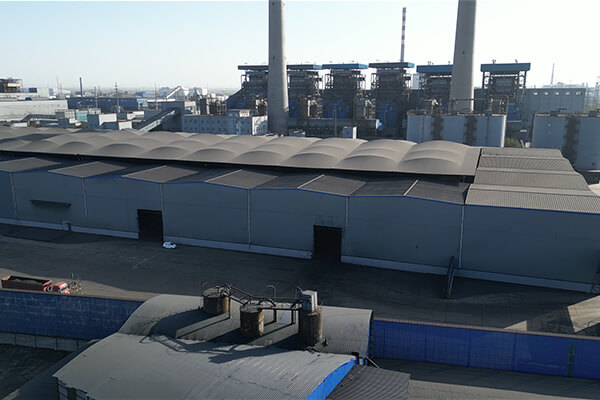
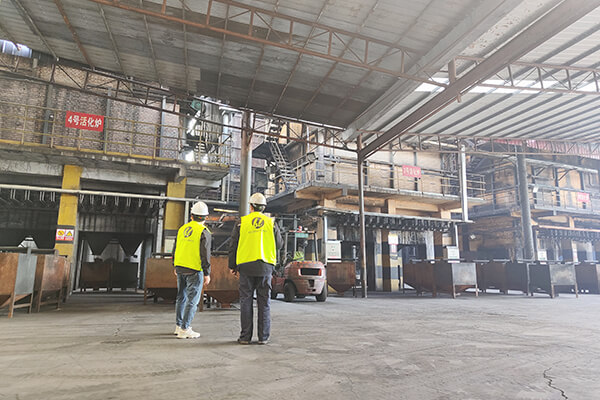
Heycarbons has sufficient inventory and strong production capacity, and will report production progress to you from time to time.
Shipping
Heycarbons know you need to receive the product as soon as possible, after rigorous quality checks and protective packaging, by fedex shipping.
Are You Looking for Activated Carbon Supplier for Lithium Purification?
Contact us for design assistance, free quote, and expert advice today.
Your inquiry will be replied within 24 working hours, and Heycarbons respect your privacy.