
Activated Carbon For Glycerol Decolorization Heycarbons Manufacturer From China
What is Glycerol?
Glycerol, also known as propylene glycol, is divided into two types according to different production methods: natural extraction and chemical synthesis.

Natural glycerol
- Saponification reaction: When animal and plant oils (such as palm oil, soybean oil) react with alkali (NaOH/KOH) to make soap, glycerol will be produced as a by-product.
- Biodiesel production: After the oil and methanol ester exchange reaction, crude glycerol (containing impurities need to be purified) is produced as a by-product.
Synthetic glycerol
- Propylene method (industrial mainstream): Propylene → allyl chloride → epichlorohydrin → hydrolysis → glycerol.
- Fermentation method (biological pathway): Microorganisms (such as yeast, bacteria) ferment sugars to produce glycerol.
Glycerol is widely used in food, medicine, cosmetics, chemical industry and other fields. Glycerol of different purities is suitable for different fields. Activated carbon is mainly used for decolorization and impurity removal in glycerol purification, which is one of the key steps to improve the quality of glycerol.
Glycerol for different purposes has different purity requirements
- Industrial-grade glycerin, with a purity of 80-95%, is used in antifreeze, lubricants, etc. and has a high tolerance for impurities.
- Food-grade glycerin, with a purity of ≥99.5%, complies with FDA/GB standards, is used in food and medicine and must comply with food additive standards.
- Pharmaceutical-grade glycerin, with a purity of ≥99.7%, complies with USP/EP standards and is used in injections and high-end cosmetics. It has extremely high purity requirements and must be non-toxic, colorless and odorless.
Why Use Activated Carbon for Glycerin Treatment
What is activated carbon used for in glycerol purification?
1. Decolorization
Mechanism of action
- Activated carbon effectively adsorbs colored substances (such as caramel color, polyphenols, aldehydes and ketones) and some organic macromolecules (proteins, colloids, etc.) in glycerol through physical adsorption (van der Waals force) and partial chemical adsorption.
- Applicable to glycerol produced as a byproduct of biodiesel or glycerol produced by saponification, which is usually dark yellow to brown.
Process parameters
- Activated carbon dosage: usually 0.5%~5% of the mass of glycerol (adjusted according to the impurity content).
- Temperature: Heating to 60~80℃ can increase the adsorption rate (but too high a temperature may cause glycerol oxidation).
- Contact time: Stir for 30~60 minutes to ensure sufficient adsorption.
- Filtration: Diatomaceous earth filtration or plate and frame filter press is required to avoid activated carbon residue.
Effect
It can change glycerol from dark to colorless or light yellow, and significantly improve the light transmittance (in line with food grade/pharmaceutical grade standards).
2. Remove impurities and odors
Adsorption object
- Residual fatty acids: free fatty acids or their saponification products that have not been completely reacted.
- Aldehydes and ketones: odorous substances produced by oxidation during the storage or production of glycerol.
- Trace methanol (glycerol produced as a byproduct of biodiesel): some activated carbon can adsorb residual methanol, but the effect is not as good as distillation.
Precautions
Activated carbon has a good adsorption effect on non-polar organic matter (such as fatty acids), but its adsorption capacity for polar small molecules (such as inorganic salts and metal ions) is limited, and it needs to be combined with ion exchange resin for further purification.
3. Improve the purity of glycerol
- Combined with ion exchange: first remove organic impurities through activated carbon, then desalt through ion exchange resin, which can significantly reduce the subsequent process load.
- Pretreatment distillation: Glycerol treated with activated carbon is less likely to coke during vacuum distillation, extending the life of the equipment.
How to use activated carbon for glycerin
In order to reach food grade, pharmaceutical grade or high purity industrial grade standards, purification is required. The following are common glycerol purification methods:
Pretreatment (pre-treatment of crude glycerol purification)
(1) Acid treatment (neutralization of free alkali)
Applicable conditions: Crude glycerol (such as saponification byproduct) contains excess alkali (NaOH/KOH).
Method: Use hydrochloric acid (HCl) or phosphoric acid (H₃PO₄) to adjust the pH to 4~5 to precipitate free fatty acids and remove them by filtration.
Reaction formula: R-COONa + HCl → R-COOH(precipitation)+ NaCl
(2) Demethanolation (applicable to glycerol byproduct of biodiesel)
Method: Distill or evaporate to remove residual methanol (boiling point 64.7℃).
What is the method of purification of glycerin?
(1) Glycerin activated carbon adsorption decolorization
Glycerin activated carbon function: Remove pigments and organic impurities (proteins, colloids, etc.).
Method of activated carbon glycerol:
- Add 1%~5% powdered activated carbon (food grade).
- Heat to 60~80℃ and stir for 30~60 minutes.
- Filtration/sedimentation to remove carbon powder.
- Subsequent dehydration, distillation or refining treatment.
(2) Ion exchange resin method
Function: Remove metal ions (Na⁺, K⁺, Ca²⁺, Mg²⁺) and charged impurities.
Method:
- First remove metal ions through cationic resin (H⁺ type).
- Then remove acidic impurities through anionic resin (OH⁻ type).
- Finally, use mixed bed resin to improve purity.
Advantages: High-purity glycerol (>99.5%) can be obtained.
(3) Distillation (molecular distillation/reduced pressure distillation)
Applicable: high boiling point glycerol (boiling point 290℃, easy to decompose under normal pressure).
Method:
- Reduced pressure distillation (vacuum degree 5~10 mmHg, temperature 120~180℃).
- Molecular distillation (ultra-high vacuum, short-path distillation, suitable for heat-sensitive glycerol).
Effect: can separate glycerol from high boiling point impurities (such as residual fatty acids).
(4) Membrane filtration (ultrafiltration/nanofiltration)
Applicable: removal of large molecular impurities (such as proteins, colloids).
Method:
- Ultrafiltration (UF): removal of large molecules (>1000 Da).
- Nanofiltration (NF): removal of small molecular salts and pigments.
Advantages: energy saving, suitable for continuous production.
(5) Crystallization purification (low temperature crystallization method)
Applicable: high purity glycerol (pharmaceutical grade).
Method:
- Cool down to below 0℃ to partially crystallize the glycerol.
- Centrifugal separation to remove liquid impurities.
Disadvantages: high energy consumption, suitable for small-scale production.
Heycarbons Activated Carbon for Glycerin Product
Heycarbons Best Activated Carbon for Glycerin
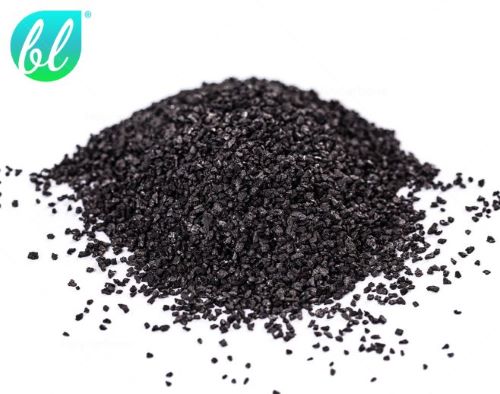
Heycarbons’ briquettes, granules and powdered activated carbon can all be used for glycerin treatment. Different products have different application scenarios.
Acid-washed briquetted activated carbon is suitable for glycerin purification, while granular activated carbon is suitable for tail liquid treatment (pH 9-11), and acid-washed granular activated carbon is suitable for mid-liquid treatment.
The following will provide more detailed product information through cases.
Activated Carbon for Glycerin Customer Case
Wood Powdered Activated Carbon for Glycerin Customer Case
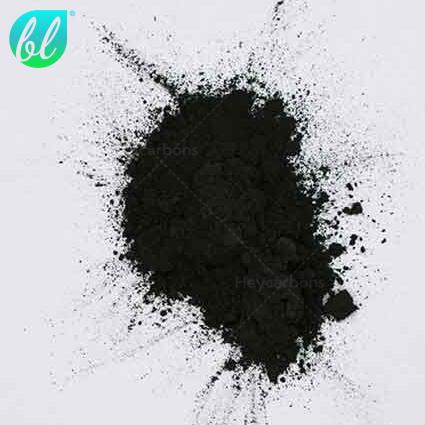
A Peruvian customer requested the use of wood powdered activated carbon for glycerin decolorization. Customer required specifications:
- 200mesh
- Methylene blue 210mg/g
- pH 5-8
In addition to wood powdered activated carbon, briquette granular activated carbon from coal is also a popular glycerin decolorization product among customers.
Wood Activated Carbon

Briquetted Activated Carbon for Glycerin Customer Case
A customer from Malaysia needs activated carbon for glycerin decolorization. The product specifications required by the customer are as follows:
- Acid washed, briquetted activated carbon
- 12*40mesh
- Molasses value 230
- Iodine value reduced by 50mg/g after acid washing
- pH 7-9
Custom Heycarbons Activated Carbon Solution For Glycerol Decolorization
Heycarbons provides a full range of activated solutions at competitive prices.
What Clients Say on Our Activated Carbon
Customize Heycarbons Activated Carbon for Glycerol Decolorization
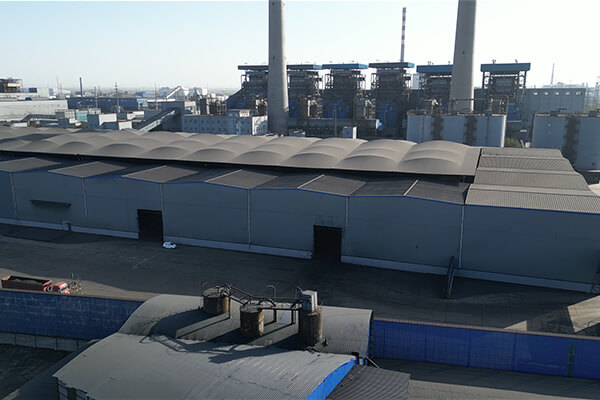
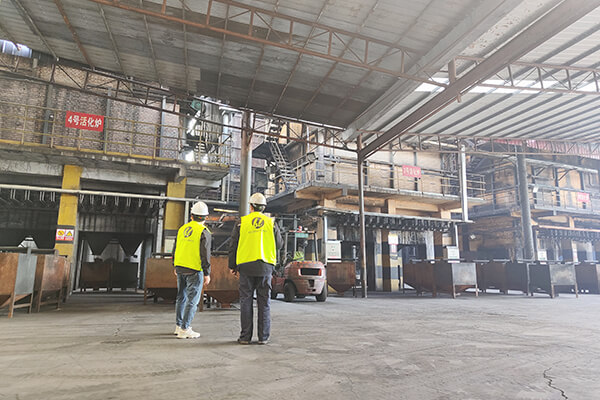
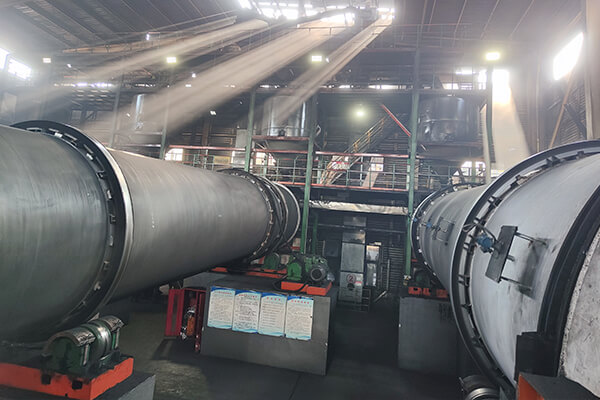
Heycarbons has proudly served the activated charcoal industry with high-quality products since 2005, Heycarbons can customize your wood activated charcoal for your project.
- Customize different raw materials according to different applications.
- Customized size, iodine value , methylene blue, molasses value, PH, ash, etc.
- Cost-effective solutions customized according to customer applications.
- China leading and professional supplier of activated carbon.
Steps to Custom Activated Carbon For Glycerin Decolorization
Consultation
By understanding your needs and requirements, our salesmen work with you to submit the appropriate activated carbon solution.
Quotation
Heycarbons expert customer service will provide you with a free quote based on your requirements as well as product specifications and quantities.
Production
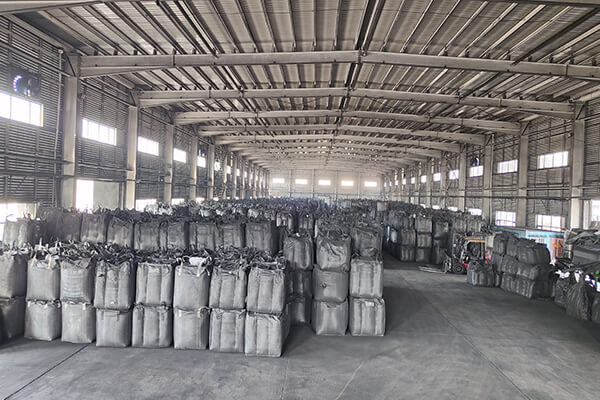
Heycarbons has sufficient inventory and strong production capacity, and will report production progress to you from time to time.
Shipping
Heycarbons know you need to receive the product as soon as possible, after rigorous quality checks and protective packaging, by fedex shipping.




Are You Looking for Activated Carbon For Glycerin Decolorization?
Contact us for design assistance, free quote, and expert advice today.
Your inquiry will be replied within 24 working hours, and we respect your privacy.