Activated Carbon for CO2 Purification Heycarbons Manufacturer From China
You will learn about activated carbon for CO2 purification necessity, customer cases, product, and processes in this article.
What's the Purpose of CO2 Purification?
Since the Industrial Revolution, carbon dioxide (CO₂) has gradually transformed from an industrial emission gas into an important industrial gas resource and has been widely used in many high-value-added fields.
With the advancement of modern industry, the requirements for CO₂ purity are constantly increasing in industries such as food and beverage, electronics manufacturing, metal processing, and fine chemicals.
Especially in the food and beverage industry, CO₂ is used for carbonated beverages, food preservation, and cold chain transportation. In the electronics manufacturing field, high-purity carbon dioxide can be used in precision cleaning, supercritical cleaning processes, and some precision manufacturing auxiliary processes.
These applications impose stringent standards for gas purity, safety, and stability, thus requiring deep purification treatment of industrially sourced CO₂.
Currently, the primary sources of CO₂ in industry include byproduct gases generated during the production of fertilizers or ammonia plants, CO₂ generated during bio-fermentation processes, and CO₂ obtained from natural gas purification or industrial exhaust gases (such as coal-fired power plants or steel plants).
However, CO2 from these sources often contains various gaseous impurities, such as nitrogen oxides (NOx), sulfur dioxide (SO₂), and trace amounts of volatile substances. These impurities not only affect product quality but can also cause off-odors, corrode equipment, and even adversely affect food safety and the performance of electronic products. Therefore, to meet the high standards required for food-grade or electronic-grade applications, the recovered CO2 must undergo meticulous purification and refinement.
During the purification process, activated carbon is widely used in purification processes due to its well-developed pore structure and large specific surface area. Through carbonization and activation processes, activated carbon forms a highly porous structure that can effectively adsorb sulfur dioxide, nitrogen oxides, and other trace impurities, thereby improving the purity of CO2.
Heycarbons can help you achieve efficient purification of industrial by-product carbon dioxide through a rationally designed adsorption and regeneration process, enabling it to meet the stringent usage standards of industries such as food and beverage and electronics manufacturing.
Activated Carbon for CO2 Purification Adsorption Principles
In processes designed to remove associated gas impurities from CO₂, the adsorption principle primarily relies on physical adsorption and chemical reaction.
Activated carbon, as a porous material, forms a huge specific surface area and a highly developed pore structure after carbonization and activation treatment. When mixed gases pass through, van der Waals forces firmly trap pollutant molecules within the pores, while the less polar CO₂ molecules can more easily pass through the bed, thereby achieving purification of the bulk gas phase.
To enhance adsorption selectivity, activated carbon usually undergoes impregnated and modified. The loaded chemical substances can react with the target pollutants. For example, impregnation with KOH can adsorb gaseous impurities such as SO2 and NO2. This chemical conversion process not only fixes gaseous pollutants into solid salts, but also significantly improves adsorption selectivity and capacity.
Activated Carbon for CO2 Purification Customer Case
Pelletized Activated Carbon for CO2 Purification-USA Customer Case
One of our American clients is a manufacturer of CO2 gas processing systems. The system utilizes various sources, including fermentation gases and combustion byproducts, to produce beverage-grade liquid carbon dioxide.
The customer wants to incorporate activated carbon into their system to remove substances such as NO, NO₂ and SO₂, thereby obtaining pure CO₂.

Based on this, and with the advice and calculations of professional technicians, Heycarbons recommends a two-stage filtration scheme: First, use CTC60 extruded impregnated with 6-8% KOH to remove NO₂ and SO₂; then, employ CTC60 pelletized activated carbon impregnated with MnO₂ or Fe₂O₃ or CuO to remove NO.

Pelletized Activated Carbon for CO2 Purification-Austrian Customer Case
An Austrian customer needs to purify CO2 gas captured from flue gas. Requirement of the captured carbon dioxide are presented in the table below:

The incoming gas composition includes NOx, HH3, Amine, HCN. The quantities are shown in the table below.

Requirement of the captured carbon dioxide are presented in the table below:
The customer requires the removal of the following substances:
- Removal of ammonia and amines
- Removal of HCN and reactive trace gases
- Removal/polishing of NOx (NO and NO2)
Customer’s objective is to achieve an outlet specification of:
NH3 + amines + NOx + HCN < 1 ppmv (sum)
Based on an in-depth analysis of the client’s purified CO2 requirements and precise calculations by Heycarbons professional technician, the following recommended solution was finally obtained.
This process employs a functionally graded activated carbon bed design to achieve step-by-step deep purification of gas:
- 4mm CTC60 acid-impregnated pelletized activated carbon, which can also be impregnated with H3PO4 phosphoric acid, efficiently captures NH₃ and amines.
- 4mm CuO loaded catalytic pelletized activated carbon is used to remove HCN, reactive trace gases, and NOx (NO and NO₂).
- Final polishing bed is performed using 4mm anthracite columnar activated carbon with CTC 60 to ensure compliance with emission standards.
Pelletized activated carbon specification and more detailed information can be found at: https://heycarbons.com/pelletized-activated-carbon/
If you and your team are also looking for CO2 purification solutions, please feel free to contact us anytime. Heycarbons can customize professional, efficient, and cost-effective activated carbon solutions for you-saving you effort and giving you peace of mind. Get your solution now!
Impregnated Activated Carbon for NO vs. NO2 Removal
NO₂ is an acidic oxide that can react chemically with alkalis and is easily adsorbed directly.
On the other hand, NO is chemically stable, insoluble in water, and does not react directly with alkalis. It must first undergo oxidation with the catalytic oxidation material before being adsorbed and fixed.
Chemical Reaction Mechanism and Process of NO2 Adsorption
Under flue gas conditions (containing O₂ + water vapor), activated carbon impregnated with KOH can chemically react with NO2 to eventually generate potassium nitrate KNO₃, which is fixed in the activated carbon’s pores. The chemical reaction process is as follows:
1. NO2 undergoes disproportionation in the presence of water, producing nitrous acid (HNO₂) and nitric acid (HNO₃):
- 2NO₂ + H₂O → HNO₂ + HNO₃
2. KOH rapidly neutralizes the acid, producing KNO₂ and KNO₃:
- HNO₃ + KOH → KNO₃ + H₂O
- HNO₂ + KOH → KNO₂ + H₂O
3. Oxygen further oxidizes the nitrite KNO₂ to form the nitrate KNO₃:
- 2KNO₂ + O₂ → 2KNO₃
Chemical Reaction Mechanism and Process of NO Adsorption
CuO, MnO2, and Fe2O3 can be selected as impregnating materials for activated carbon to remove NO. This is mainly based on the following mechanisms and advantages (taking CuO as an example).
Within the loaded CuO, the Cu²⁺ sites effectively catalyze the oxidation of NO, causing it to react with O₂ in the flue gas to generate NO₂ (2NO + O₂ → 2NO₂).
The generated NO₂ then undergoes chemical adsorption or reaction with CuO, transforming into stable copper nitrate (Cu(NO₃)₂), thereby achieving NO fixation and removal.
This technology is particularly suitable for treating low-concentration NOx and exhibits excellent removal efficiency in the medium-temperature range (approximately 80–200°C).
MnO2, Fe₂O₃, and Cu-Mn composites also show good catalytic oxidation performance at 100–200°C. Furthermore, choosing MnO2 or Fe₂O₃ offers a cost advantage over CuO.
How to Purify Carbon Dioxide CO2 Gas Using Activated Carbon?
After treatment through an activated carbon bed, impurities in CO2 gas can be minimized. The following will outline the purification process of the system, including activated carbon adsorption section:
1. Pretreatment
The collected raw gas enters the scrubbing tower, where ethanol vapor, soluble organic matter, foam, and some particulate impurities are removed by water or alkaline washing, initially reducing H₂S. The scrubbing liquid requires periodic replacement or recycling.
2. Demister
Gas passing through a wire mesh demister or cyclone separator can remove liquid droplets, preventing liquid from entering the compressor and reducing the risk of corrosion in downstream equipment.
3. Compression Stage
Gas enters the compressor, where the pressure rises to 16–20 bar. This increases the gas density, promoting subsequent condensation to meet liquefaction requirements.
The compression process typically involves multi-stage compression, and is equipped with an intercooler.
4. Cooling and Condensation Dehydration
The high-temperature gas after compression enters the cooling system and is cooled to -5 to 5°C. Water vapor condenses and is automatically discharged.
This process removes over 90% of the moisture.
5. Activated Carbon Adsorption
Gas enters the activated carbon adsorption tower (typically operated with two towers in alternating cycles), where impurities are removed through a combination of physical adsorption and chemical reactions.
This step constitutes the core and crucial step in CO2 gas purification.
6. Molecular Sieves Deep Dehydration
Gas enters the molecular sieve drying tower (3A or 13X), reducing moisture to <10 ppm, ensuring that ice blockage does not form during subsequent liquefaction.
7. Liquefaction Section
The purified CO₂ is cooled to approximately -20°C under 18–22 bar pressure. It then enters a condenser and transforms into liquid CO₂.
Distillation is performed if ultra-high purity is required.
8. Storage and Transportation
Liquid CO₂ is stored in cryogenic tanks under the following conditions:
- Temperature: -20℃
- Pressure: 18–22 bar
It is then pumped to the filling or usage end.
Throughout the entire purification process, you gain not only high-purity CO2 carbon dioxide, but also enhanced stability and competitiveness for your entire production system.
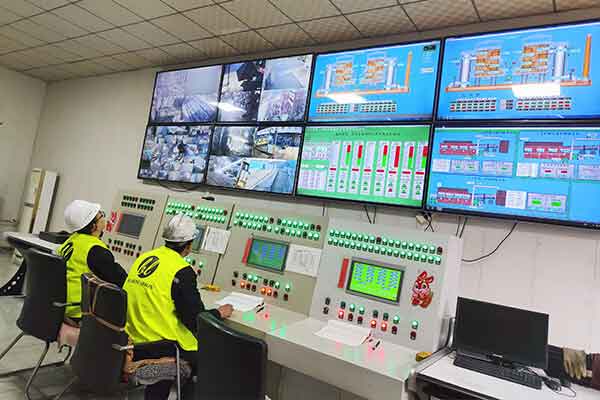
Heycarbons activated carbon adsorption section employs precise filling design and differential pressure control to achieve highly efficient purification while minimizing energy and carbon consumption. This means less downtime for maintenance, lower operating costs, and a more robust supply chain.
Heycarbons is committed to ensuring that every investment you make in environmental protection truly translates into tangible profits for you.
Custom Heycarbons Activated Carbon for CO2 Purification
Heycarbons provides a full range of professional activated carbon solutions at competitive prices.
Why Choose Heycarbons Activated Carbon?
Heycarbons has proudly served the activated carbon industry with high-quality products since 2005. Heycarbons can customize activated carbon solutions for your CO2 purification project.
- Have extensive experience in multiple CO2 purification projects.
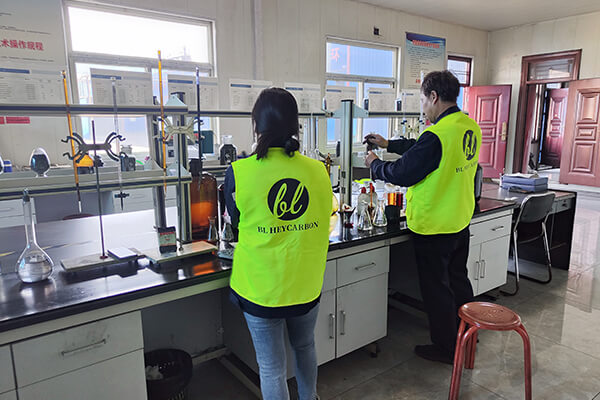
- Collaborate with five professional technicians and researchers in the chemical industry to provide technical support.
- Heycarbons can accurately calculate usage, predict saturation points, and plan replacement cycles for our clients.
Call Us
+86-180 3788 5195
Our Email
info@heycarbons.com
Steps to Custom Heycarbons Activated Carbon CO2 Purification
Consultation
By understanding your needs and requirements, our salesmen work with you to submit the appropriate activated carbon solution.
Quotation
Heycarbons expert customer service will provide you with a free quote based on your requirements as well as product specifications and quantities.
Production
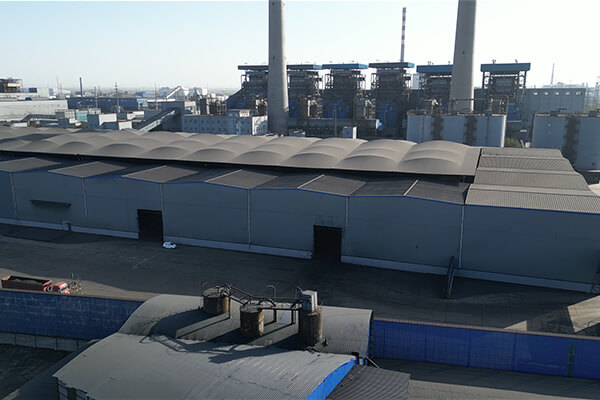
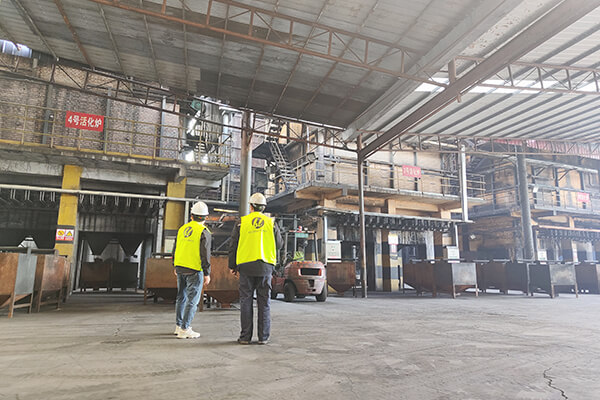
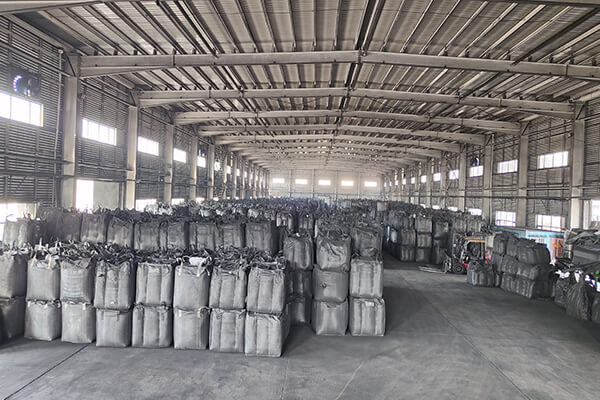
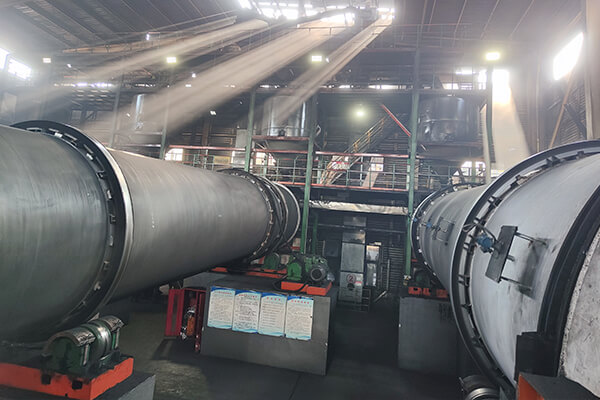
Heycarbons has sufficient inventory and strong production capacity, and will report production progress to you from time to time.
Shipping
Heycarb know you need to receive the product as soon as possible, after rigorous quality checks and protective packaging, by fedex shipping.



Are You Looking for Activated Carbon Manufacturers for CO2 Purification?
Contact us for design assistance, free quote, and expert advice today.
Your inquiry will be replied within 24 working hours, and we respect your privacy.