
Carbon Molecular Sieve (CMS)
What is Carbon Molecular Sieve (CMS)?
Carbon Molecular Sieve (CMS) is a new type of carbonaceous adsorbent. The pore structure of carbon molecular sieve determines its molecular sieve effect. It can selectively adsorb gas molecules according to their size and shape, and can effectively help separate gases, hence the name carbon molecular sieve.
Carbon molecular sieve working principle to selectively adsorb different gases in the air mixture onto its porous surface. Carbon molecular sieve adsorption capacity for a specific gas depends on the size and shape of the gas molecules, as well as the pore size structure of the carbon molecular sieve used.
From a microscopic perspective, CMS is composed of very small graphite-like crystallites. Carbon molecular sieves have ultramicropores close to the size of molecules, with a uniform pore size distribution (3~10 Å), enabling the separation of molecules with differing steric structures.
The preparation and application of granular carbon molecular sieves have now been industrialized.
The emergence of fibrous carbon molecular sieves and carbon molecular sieve membranes has enriched the application forms of carbon molecular sieves, and they are new carbon materials with broad application prospects.
People also ask what carbon molecular sieve is used for.
It’s used for various industrial applications, including but not limited to gas separation, catalysis, water purification and controlled oxidation treatment.
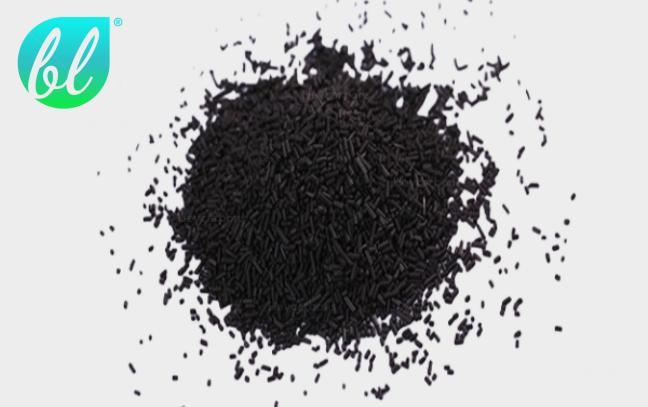
Advantages of Heycarbons Carbon Molecular Sieve Uses

Your advantages of CMS at a glance: Nitrogen production
Carbon molecular sieve can be used to separate air and collect nitrogen. Carbon molecular sieve has strong nitrogen production capacity, high nitrogen recovery rate and long service life.
It is suitable for various types of PSA nitrogen generators and is an important part of PSA nitrogen generators. Carbon molecular sieve air separation nitrogen production has been widely used in petrochemical, metal heat treatment, electronic manufacturing, food preservation and other industries.
You will get a quote in 24 hours
Your advantages of CMS at a glance:Oxygen production
Oxygen molecules in the air can be preferentially adsorbed by carbon molecular sieves under certain conditions due to their smaller molecular size, and the PSA technology can efficiently separate oxygen and nitrogen.
Carbon molecular sieves can be used for medical oxygen supply, and provide oxygen as fuel or oxidant for chemical reactions in industries such as steel smelting and chemical industry.
You will get a quote in 24 hours
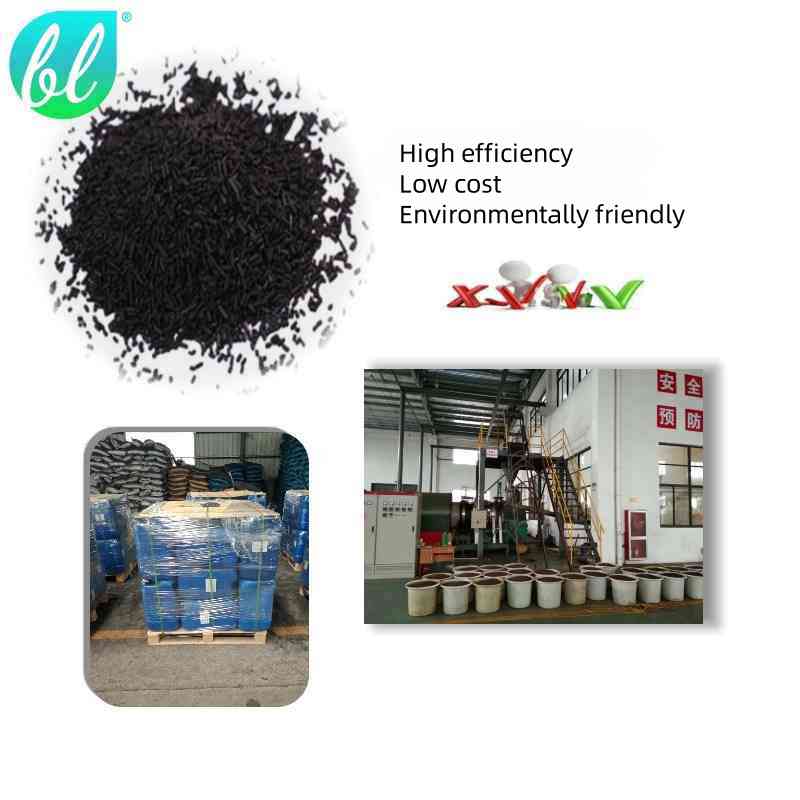
Heycarbons Carbon Molecular Sieve Nitrogen Generation
When carbon molecular sieve for nitrogen generator, it is used to separate air and purification. The main components of air are nitrogen (about 78%) and oxygen (about 21%). Oxygen molecules are smaller and more polar, so they are more easily adsorbed by carbon molecular sieves than nitrogen.
Working at room temperature and low pressure can save costs, and the nitrogen generation speed is faster than the traditional low temperature and high-pressure nitrogen process. Therefore, it is the preferred pressure swing adsorption (PSA) air separation nitrogen-rich adsorbent in the engineering field.
The largest application of carbon molecular sieve in the field of nitrogen production is the production of industrial nitrogen through PSA system. This nitrogen is widely used in the chemical industry, oil and gas industry, electronics industry, food industry, coal industry, pharmaceutical industry, cable, metal, heat treatment industry, etc.
PSA Nitrogen Generation Process Using CMS
The process of producing nitrogen using PSA technology is as follows:
- Adsorption stage: Under high pressure, the air passes through the adsorption tower of the carbon molecular sieve, and the carbon molecular sieve selectively adsorbs oxygen molecules and allows nitrogen to pass through.
- Separation stage: (carbon molecular sieves for gas separation processes) As oxygen is adsorbed, the nitrogen concentration in the air gradually increases, and the purified nitrogen can be used as the final product.
- Regeneration stage: After reducing the pressure, the oxygen adsorbed by the carbon molecular sieve will be desorbed and returned to the air flow. At this time, the carbon molecular sieve can be used again in the process of adsorbing oxygen.
This process can continuously generate nitrogen by controlling the cyclic operation of multiple adsorption towers. Its advantages are:
- High efficiency: PSA system combined with the selective adsorption performance of carbon molecular sieve can efficiently separate high-purity nitrogen from the air, usually reaching a nitrogen purity of more than 99%.
- Low energy consumption: PSA technology does not require cryogenic equipment. Compared with the traditional liquid air fractionation method, the energy efficiency is greatly improved, and it is energy-saving and environmentally friendly.
- Adjustability: The pore structure of carbon molecular sieve can be adjusted according to demand to meet the requirements of nitrogen purity and flow in different applications.
You will get a quote in 24 hours
You will get a quote in 24 hours
Heycarbons CMS Production Process
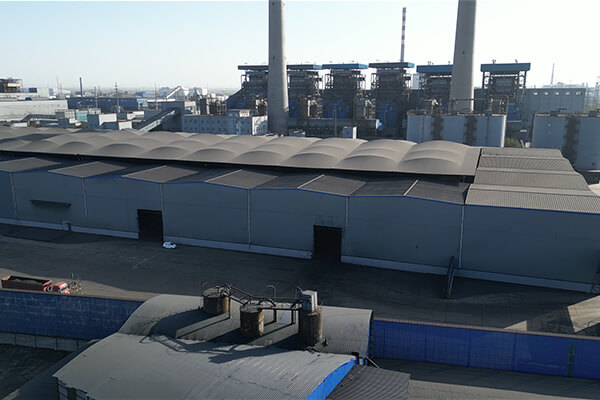
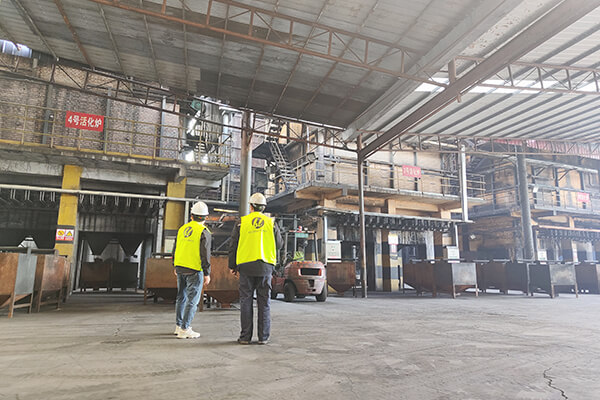
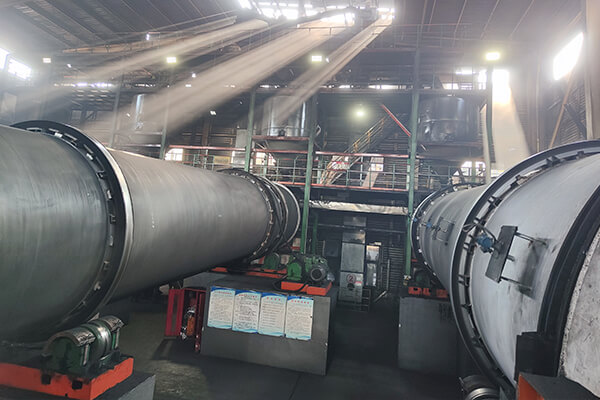
The production process of Heycarbons carbon molecular sieve involves steps: raw material preparation, carbonization, activation, post-treatment and screening.
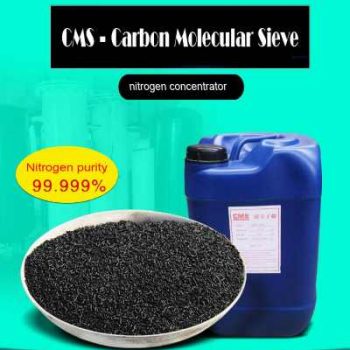
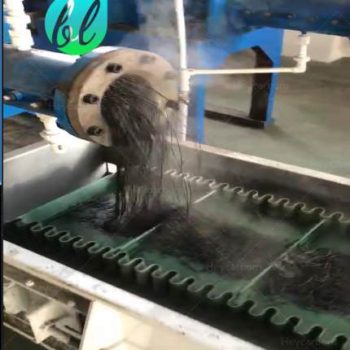
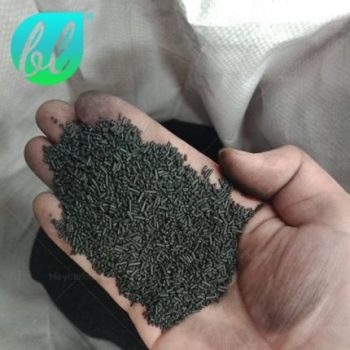
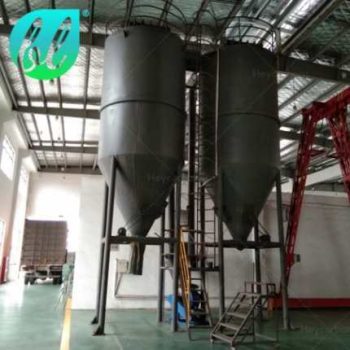
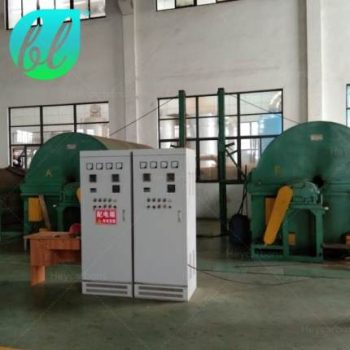
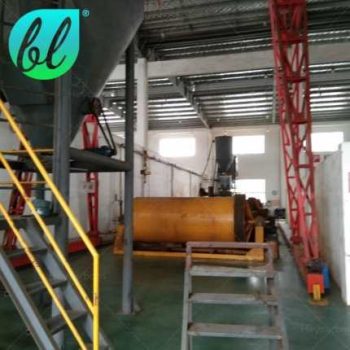
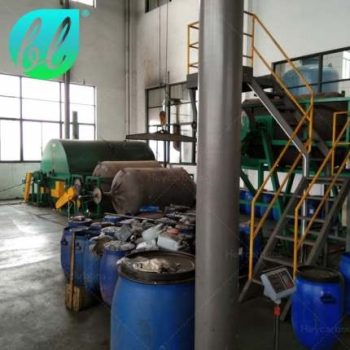
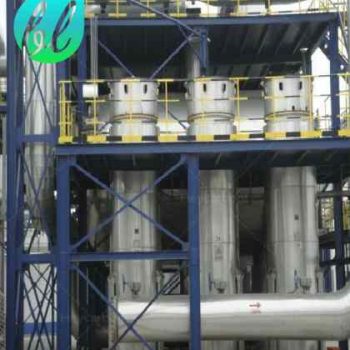
Preparation of Carbon Molecular Sieves (CMS)
Granular carbon molecular sieves can be prepared using coal-based, plant-based, and high-molecular polymers as raw materials. The preparation process varies depending on the raw materials used.
In order to achieve a strong adsorption effect on a specific adsorbate, the pore size of the carbon molecular sieve is usually adjusted. Common methods for pore size control include methods for opening or enlarging pores (activation method, pore-forming agent method, plasma method); thermal shrinkage method; and carbon deposition method.
Pore Size Control of Carbon Molecular Sieves (CMS)
During the preparation process, carbonization activation and pore size adjustment are particularly important. If the pore size after activation is too large, it hinders he subsequent carbon deposition pore adjustment; if too small, it may clog the pores during the carbon deposition pore adjustment process. When the pore size is <0.8 nm, vapor-phase carbon deposition can effectively control the pore size to below 0.5 nm.
Miurak et al. found that when carbonization is carried out at approximately 400°C, uncarbonized coal partially dissolves in the added organic solvent. The interaction between coal and organic solvent at this temperature alters the properties of the coal. This method can be used to prepare carbon molecular sieves with pore sizes ranging from 0.37 to 0.43 nm. This product can be used to separate high-purity nitrogen from air.
During the modified carbonization process, controlling the mixing of coal and organic solvents is the key to producing high-quality carbon molecular sieves.
Miura et al. investigated the effects of different catalysts (HCl, NH3, Na2CO3, NaOH, K2CO3, vinyl ethylene glycol, and polyvinyl glycol) on the structure of carbon molecular sieves based on a combined carbonization method.
- Carbon molecular sieves prepared with NH3 had more pores than those prepared with HCl;
- Carbon molecular sieves prepared with Na2CO3, NaOH, and K2CO3 had smaller pore sizes;
- And vinyl ethylene glycol and polyvinyl glycol could increase the volume and size of the pores.
Carbon Molecular Sieve in Other Applications
In addition to nitrogen and oxygen production, CMS can also be used for:
- Biogas treatment at landfills
- Separation of high-purity oxygen from air.
- Purification of hydrogen using PSA technology
- CO2 capture in a confined space
Applications of CMS in Sealed Environments Such as Aerospace
In spaceflight, to avoid the disposal carbon dioxide adsorbents, regenerable functionalized carbon molecular sieves for CO₂ capture are also a current international research hotspot.
As human scientific research and development activities expand across diverse fields, the increase in carbon dioxide in high-humidity environments caused by human activities in enclosed systems has restricted human activities. This poses a severe challenge to the protection of national defense collectives and individuals.
Zhu Chunye, Guo Kunmin, Xie Zili, and others conducted research on the preparation method and performance evaluation of renewable functionalized carbon molecular sieves for purifying carbon dioxide in closed aerospace systems. The results showed that the developed functionalized carbon molecular sieves have good purification and reusability effects, showing great application potential for carbon dioxide purification in enclosed systems.
You will get a quote in 24 hours
You will get a quote in 24 hours
F-CMS Functionalized Carbon Molecular Sieves
The functionalized molecular sieve undergoes pore structure modification and functionalization treatment on a specific carbon molecular sieve, resulting in a carbon molecular sieve (CMS) functional material capable of purifying trace amounts of CO2 under high humidity conditions.
At the same time, the dynamic adsorption performance of the functionalized carbon molecular sieve for CO2 was tested under laboratory conditions (low concentration, low humidity) simulating practical aerospace conditions (low concentration, high humidity).
The results indicate that the developed carbon molecular sieve has excellent CO2 adsorption capacity and good regeneration ability. After functionalization treatment, the CO2 adsorption capacity significantly increases, the time required to reach adsorption equilibrium is also extended, and it can be regenerated. Therefore, functionalized carbon molecular sieves can initially meet the requirements for CO2 purification in enclosed environments.
F-CMS Preparation Process
The preparation process can be represented by Figure-1. This process primarily involves the following steps: crushing carbon-containing plants into amorphous materials, carbonizing them into carbon particles under certain conditions, activating them into carbon molecular sieves under suitable conditions, modifying their pore structure, and functionalizing them. Ultimately, functionalized carbon molecular sieves are obtained.

Figure 1: Functionalized Carbon Molecular Sieve Preparation Process
Dynamic Adsorption Performance Test of F-CMS
Dynamic adsorption performance testing was conducted on the prepared functionalized carbon molecular sieve samples (F-CMS). The dynamic adsorption performance of F-CMS for CO2 was tested on the apparatus shown in Figure-2. Compressed air was used as the carrier gas, and the CO2 concentration was detected online using a HORIBA PG250 gas analyzer. Simultaneously, changes in the concentrations of NO., SO2, O2, and CO in the gas stream were monitored.
During the dynamic experiment, the concentrations of NO., SO2, O2, and CO fluctuated within normal ranges but did not change with the adsorption process. This indicates that the developed adsorbent effectively adsorbs CO2 without affecting normal oxygen supply requirements.
The experimental parameters and results of the dynamic adsorption performance of carbon molecular sieves and functionalized carbon molecular sieves for CO2 are shown in Table-1. As shown in the table, functionalization significantly improves the adsorption capacity of carbon molecular sieves, and also increases their density. This indicates that the functionalizing reagent is effectively loaded onto the carbon molecular sieve, providing the material basis for increased CO₂ adsorption capacity.

Figure 2: Dynamic flow chart of CO2 adsorption by functionalized carbon molecular sieves
1 – Air Compressor; 2 – CO₂ Cylinder; 3 – Pressure Regulator; 4~8 – Gas Flowmeters; 9 – Three-way Valve; 10 – Packed-bed Adsorption Column; 11 – Three-way Valve; 12 – HORIBA PG-250 Gas Analyzer; 13 – Humidifier
Table 1: Comparison of the performance of Carbon Colecular Sieves (CMS) and Functionalized Molecular Sieves (F-CMS)
| Project | CMS | F-CMS |
|---|---|---|
| Initial CO2 concentration c₀ (%) | 0.40 | 0.40 |
| Bulk density ρ/(g/cm3) | 0.47 | 0.56 |
| Bed height L (cm) | 11.5 | 11 |
| Particle size d (mm) | 1.1 | 1.1 |
| Relative humidity φ (%) | 25 | 20 |
| Superficial gas velocity u (m/s) | 0.03 | 0.03 |
| Pressure drop Δp (kPa) | 0.078 | 0.078 |
| Average adsorption capacity a (mg/g) | 2..2 | 12.7 |
| Single adsorption time t (min) | 18 | 110 |
F-CMS Adsorption-Desorption Regeneration Performance Data
The results of three adsorption-desorption (regeneration) cycles are shown in Figure-3 (regeneration was carried out at room temperature and 10⁻³ Pa, simulating spaceflight conditions). It can be seen that the adsorption-desorption curves exhibit good consistency.
Multiple regeneration experiments indicate minimal variation in adsorption capacity.
Currently, the functionalized carbon molecular sieve with the best experimental results in this study shows an average adsorption capacity of 12.7 mg/g (maximum 17.1 mg/g) for 0.4% CO₂ at a relative humidity of 80%.

Figure 3: The result of F-CMS after three regenerations (adsorption-desorption)
You will get a quote in 24 hours
You will get a quote in 24 hours
Recommendation of Heycarbons CMS
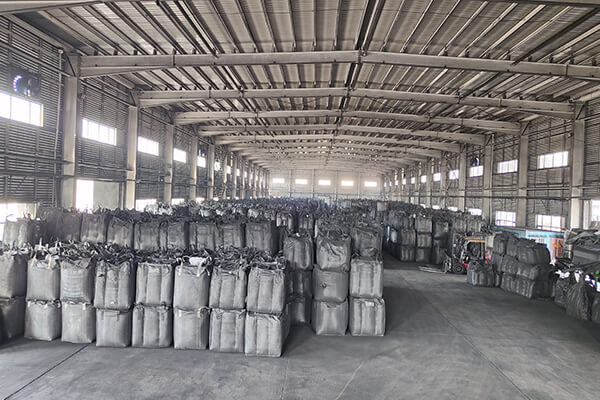
Heycarbons carbon molecular sieve is pelletized, with particle diameters of 1mm, 1.5mm, and 2mm in most cases. Both CTC and iodine values are low, with CTC being only 30%-40%.
Carbon molecular sieves HS code is 380210. If you need high-efficiency carbon molecular sieves for nitrogen production, please contact the Heycarbons. With 20 years of history, complete production equipment and extensive project experience. Heycarb team can provide you with professional advice and suggestions according to your needs. Contact us to get free samples.
Carbon Molecular Sieve Specification
Model CMS-200 Technical Parameters:
1. Particle diameter: 1.0-2.0mm
2. Bulk density: 680-700kg/m3
3. Adsorption cycle: 2×60S
4. Compressive strength: ≥70N/particle
Model Adsorbent
pressure
(Par)N2 purity
(%)N2 production rate
(Nm3/h.t)N2 recovery(%)
(N2/Air)
CMS-200 0.6 99.99 60 ≥21
99.9 115 ≥31
99.5 165 ≥40
99 190 ≥45
98 230 ≥46
97 270 ≥48
0.8 99.99 75 ≥21
99.9 140 ≥31
99.5 200 ≥40
99 235 ≥45
98 275 ≥46
97 315 ≥48
Model CMS-220 Technical Parameters:
1. Particle diameter: 1.0-2.0mm
2. Bulk density: 680-700kg/m3
3. Adsorption cycle: 2×60S
4. Compressive strength: ≥70N/particle
| Model | Adsorbent pressure (Par) | N2 purity (%) | N2 production rate(Nm3/h.t) | N2 recovery(%) (N2/Air) |
|---|---|---|---|---|
| CMS-220 | 0.6 | 99.99 | 75 | ≥21 |
| 99.9 | 130 | ≥31 | ||
| 99.5 | 175 | ≥40 | ||
| 99.0 | 205 | ≥45 | ||
| 98.0 | 245 | ≥46 | ||
| 97.0 | 285 | ≥48 | ||
| 0.8 | 99.99 | 100 | ≥21 | |
| 99.9 | 160 | ≥31 | ||
| 99.5 | 220 | ≥40 | ||
| 99.0 | 255 | ≥45 | ||
| 98.0 | 295 | ≥46 | ||
| 97.0 | 335 | ≥48 |
Model CMS-240 Technical Parameters:
1. Particle diameter: 1.0-2.0mm
2. Bulk density: 680-700kg/m3
3. Adsorption cycle: 2×60S
4. Compressive strength: ≥70N/particle
| Model | Adsorbent pressure (Par) | N2 purity (%) | N2 production rate (Nm3/h.t) | N2 recovery(%) (N2/Air) |
|---|---|---|---|---|
| CMS-240 | 0.6 | 99.99 | 95 | ≥21 |
| 99.9 | 150 | ≥31 | ||
| 99.5 | 200 | ≥40 | ||
| 99.0 | 230 | ≥45 | ||
| 98.0 | 270 | ≥46 | ||
| 97.0 | 310 | ≥48 | ||
| 0.8 | 99.99 | 115 | ≥21 | |
| 99.9 | 180 | ≥31 | ||
| 99.5 | 240 | ≥40 | ||
| 99.0 | 280 | ≥45 | ||
| 98.0 | 320 | ≥46 | ||
| 97.0 | 360 | ≥48 |
Model CMS-260 Technical Parameters:
1. Particle diameter: 1.0-2.0mm
2. Bulk density: 680-700kg/m3
3. Adsorption cycle: 2×60S
4. Compressive strength: ≥70N/particle
| Model | Adsorbent pressure (Par) | N2 purity (%) | N2 production rate (Nm3/h.t) | N2 recovery(%) (N2/Air) |
|---|---|---|---|---|
| CMS-260 | 0.6 | 99.99 | 115 | ≥21 |
| 99.9 | 170 | ≥31 | ||
| 99.5 | 220 | ≥40 | ||
| 99.0 | 250 | ≥45 | ||
| 98.0 | 290 | ≥46 | ||
| 97.0 | 330 | ≥48 | ||
| 0.8 | 99.99 | 130 | ≥21 | |
| 99.9 | 200 | ≥31 | ||
| 99.5 | 260 | ≥40 | ||
| 99.0 | 300 | ≥45 | ||
| 98.0 | 340 | ≥46 | ||
| 97.0 | 380 | ≥48 |
Model CMS-300 Technical Parameters:
1. Particle diameter: 1.0-2.0mm
2. Bulk density: 640-680kg/m3
3. Adsorption cycle: 2×35-45S
4. Compressive strength: ≥70N/particle
5. Inlet temperature: ≤20℃
| Model | Adsorbent pressure(Par) | N2 purity(%) | N2 production rate(Nm3/h.t) | N2 recovery(%)(N2/Air) |
|---|---|---|---|---|
| CMS-300 | 0.7 | 99.999 | 95 | 6.8 |
| 99.99 | 145 | 4.6 | ||
| 99.9 | 210 | 3.6 | ||
| 99.5 | 300 | 3.3 |
Model CMS-F Technical Parameters:
1. Particle diameter: 1.0-2.0mm
2. Bulk density: 680-700kg/m3
3. Adsorption cycle: 2×60S
4. Compressive strength: ≥70N/particle
| Model | Adsorbent pressure (Par) | N2 purity (%) | N2 production rate (Nm3/h.t) | N2 recovery(%) (N2/Air) |
|---|---|---|---|---|
| CMS-F | 0.6 | 99.99 | 95 | ≥25 |
| 99.9 | 150 | ≥35 | ||
| 99.5 | 200 | ≥43 | ||
| 99.0 | 230 | ≥48 | ||
| 98.0 | 270 | ≥50 | ||
| 97.0 | 310 | ≥52 | ||
| 0.8 | 99.99 | 115 | ≥25 | |
| 99.9 | 180 | ≥35 | ||
| 99.5 | 240 | ≥43 | ||
| 99.0 | 280 | ≥48 | ||
| 98.0 | 320 | ≥50 | ||
| 97.0 | 360 | ≥52 |
Model CMS-H Technical Parameters:
1. Particle diameter: 1.0-2.0mm
2. Bulk density: 680-700kg/m3
3. Adsorption cycle: 2×60S
4. Compressive strength: ≥70N/particle
| Model | Adsorbent pressure (Par) | N2 purity (%) | N2 production rate (Nm3/h.t) | N2 recovery(%) (N2/Air) |
|---|---|---|---|---|
| CMS-H | 0.6 | 99.99 | 115 | ≥26 |
| 99.9 | 170 | ≥36 | ||
| 99.5 | 220 | ≥44 | ||
| 99.0 | 250 | ≥49 | ||
| 98.0 | 290 | ≥51 | ||
| 97.0 | 330 | ≥53 | ||
| 0.8 | 99.99 | 130 | ≥26 | |
| 99.9 | 200 | ≥36 | ||
| 99.5 | 260 | ≥44 | ||
| 99.0 | 300 | ≥49 | ||
| 98.0 | 340 | ≥51 | ||
| 97.0 | 380 | ≥53 |
Custom Heycarb Carbon Molecular Sieve CMS Solution
Heycarbons provides a full range of activated solutions at competitive prices.
You will get a quote in 24 hours





Let’s Get in Touch
We’re open for any suggestion or just to have a chat
Contact with us
We will give you the help you need
Floor 20, Building 2, Binhu International City, Erqi District, Zhengzhou City, Henan Province
Are You Looking for Carbon Molecular Sieve CMS Manufacturers?
Contact us for design assistance, free quote, and expert advice today.
Your inquiry will be replied within 24 working hours, and we respect your privacy.
You will get a quote in 24 hours