What are the Pollutants in Paper Mills?
Even after biological treatment, paper mill wastewater may still contain the following components. Activated carbon is mainly used in the advanced treatment stage to remove these substances:
- Recalcitrant Organic Degradation (COD): Such as lignin derivatives, resins, inks, dyes, adhesives, etc.
- Color (colored substances)
- Odor: Produced by volatile organic compounds (VOCs) and their degradation products
- Surfactant/Auxiliary Agent Residues: Rosin, sizing agents, dispersants
- Trace Heavy Metals
What is the role of activated carbon in wastewater treatment?
The main function of activated carbon is to remove residual COD and color, helping the effluent meet discharge standards or be reused.
You will get a quote in 24 hours
You will get a quote in 24 hours
Adsorption Principle of Activated Carbon Used in Paper Mills
Activated carbon is a porous carbon material with a high specific surface area. Its pore structure and surface functional groups enable it to remove pollutants from water through both physical and chemical adsorption.
Physical adsorption: Pollutant molecules enter the pores of activated carbon and are captured on the carbon surface through intermolecular forces.
Chemical adsorption: Oxygen-containing functional groups (carboxyl groups, phenolic hydroxyl groups, carbonyl groups, etc.) on the surface of activated carbon react chemically with or complex with pollutants.
What is the Water Treatment for Paper Mills Using Activated Carbon?
Papermaking wastewater has complex sources, mainly including pulping wastewater, bleaching wastewater, papermaking wastewater, and equipment cleaning wastewater.
The entire treatment process typically consists of four stages: pretreatment → primary treatment → secondary biological treatment → advanced treatment (with activated carbon adsorption as the core).
I. Pretreatment Stage
This stage uses screens, grit chambers, and equalization tanks to remove large suspended solids, fibers, paper scraps, sand, etc., from the water to prevent clogging of subsequent equipment and to balance water quality and quantity.
After this stage, the suspended solids in the wastewater are reduced, and the flow rate is more uniform, creating conditions for subsequent physicochemical treatment.
II. Primary Treatment Stage (Coagulation, Sedimentation, or Flotation)
Using coagulation reactors, flocculation tanks, sedimentation tanks, or flotation devices, colloids, suspended organic matter, some color, and COD are removed from the water.
After this stage, the suspended solids (SS) removal rate is 60-80%, and COD is reduced by approximately 20-30%.
III. Secondary Biological Treatment Stage
Purpose: To significantly reduce BOD and some COD by decomposing biodegradable organic matter in wastewater through microbial metabolism.
Main process types in this stage include:
* Activated sludge process (A/O, A²/O, SBR, etc.): Stable removal of organic matter, simultaneously removing nitrogen and phosphorus.
* Contact oxidation method: High load adaptability and good shock resistance.
* MBR membrane bioreactor: Clear effluent, suitable for direct entry into advanced treatment systems and reused water systems.
After this stage, BOD removal rate > 90%; COD removal rate 70–85%; however, it still contains lignin derivatives, resin acids, pigments, and other recalcitrant substances, requiring further advanced treatment.
IV. Advanced Treatment Stage (Activated Carbon Adsorption as the Core)
Purpose: To remove residual organic matter, color, odor, and surfactants from the biological effluent, improving effluent transparency and stability to meet discharge standards or for reuse.
Typical Process Flow:
1. Sand Filtration/Ultrafiltration
- Removes fine suspended solids and colloids, preventing clogging of the activated carbon layer;
- Filtration rate: 8–10 m/h;
- Effluent turbidity < 5 NTU.
2. Activated Carbon Adsorption Unit
- Form: Granular activated carbon (GAC) filter;
- Carbon bed height: 1.0–2.0 m;
- Filtration rate: 5–10 m/h;
- Empty bed contact time (EBCT): 10–30 min;
- Regular backwashing to prevent clogging;
- Regeneration cycle: 1–3 months (depending on load and carbon type).
3. Effluent Specifications
- COD ≤ 50 mg/L (adjustable according to standards);
- Color < 30 times;
- Turbidity < 1 NTU;
- Meets the requirements of the “Water Pollutant Discharge Standard for Paper Industry” (GB 3544-2008) or reuse requirements.
V. Post-treatment (selectable according to needs)
Depending on water usage requirements, the following may also be added:
- Ozone oxidation: assists in decolorization and breaks down recalcitrant organic matter;
- Reverse osmosis (RO) or nanofiltration (NF): obtains high-quality reclaimed water;
- Disinfection (chlorine/ultraviolet): used for sterilization before reuse or before discharge to meet standards.
You will get a quote in 24 hours
You will get a quote in 24 hours
Activated Carbon For Paper Mill Wastewater
Acid-washed Coal Granular Activated Carbon
Heysorbcarb-HeyAGAC is an acid-washed granular activated carbon produced from select grades of coal by a high temperature steam activation process under stringent quality control. This material has a large surface area, very good mechanical hardness, unique pore size distribution +(abundant mesopores and micropores), low density, chemical stability and meets medical grade specifications.
Two types of acid-washed granular activated carbon are available for customers to choose from: acid-washed coal-based granular activated carbon and acid-washed briquetted granular activated carbon.
- Iodine value: 950-1000mg/g (Acid-washed coal activated carbon)
- Iodine value: 950-1100mg/g (Acid washed reagglomerated activated carbon)
- Molassed value: 200-270 (Acid washed reagglomerated activated carbon)
- Molassed value: 150-200 (Acid-washed coal activated carbon)
- pH 6-8
- CTC: 55-65
- Moisture: 5% max.
- Ash: 12% max.
- Water Soluble Ash: 0.25% max.
Coal Activated Carbon
Heycarbons coal-based activated carbon has well-developed mesopores, making it suitable for decolorization and removal of lignin-like substances.
- 8*30 mesh granular activated carbon (Customization based on customer needs)
- Iodine value: 900-1050 mg/g
- Molasses value 150-200
- pH 8-11
- Moisture: 5% max.
- Ash: 10% max.
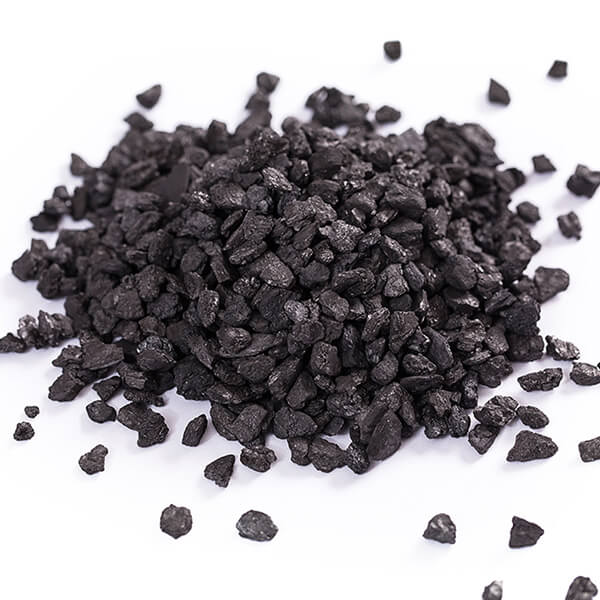
Reagglomerated Activated Carhon
The briquetting granular activated carbon (GAC) is an reagglomerate that utilizes advanced coal blending technology to combine coals of diverse areas, catering to the specific demands of customers, particularly in terms of methylene blue decolorization ability, Molasses , low ash content, cleanliness, and minimal dust generation.
- Iodine value: 900-1100 mg/g
- Molassed value 190-240
- Moisture: 3% max.
- Methylene value: 150-270 mg/g
- Abrasion Number: 78 min.
Acid Soluble Iron by weight: 0.01% max.

Powdered Activated Carbon
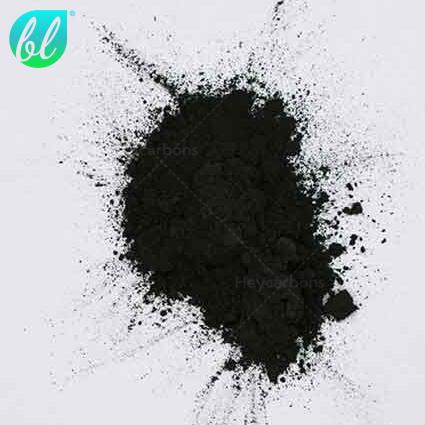
Wood powdered activated carbon can remove organic pollutants such as resins, lignin and their degradation products (which turn water yellowish-brown or dark brown).
- Size: 100, 200, 325 mesh
- Iodine value: 800-1050 mg/g
- methylene blue: 140-320 mg/g
- Caramel: 100-150%
- Bulk density: 0.35-0.45 g/cm3
- Ash %: 4-7
- PH: 2-4, 3-5, 5-7
You will get a quote in 24 hours
You will get a quote in 24 hours
Custom Heycarbons Activated Carbon For Wastewater in Paper Industry
Heycarbons provides a full range of activated solutions at competitive prices.
You will get a quote in 24 hours
What Clients Say on Our Activated Carbon
Customize Heycarbons Activated Carbon for Paper Industry Wastewater
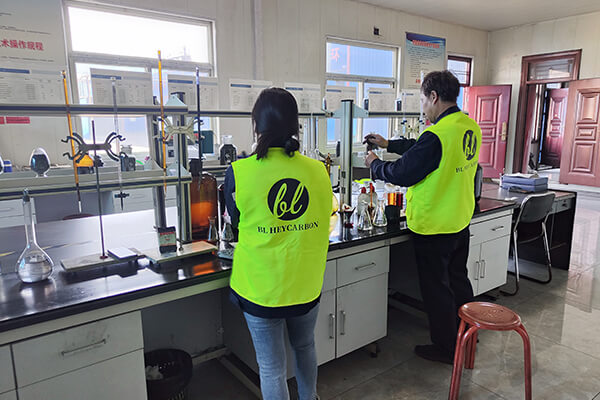
Heycarbons has proudly served the activated charcoal industry with high-quality products since 2005, Heycarbons can customize activated carbon for your paper industry wastewatern project.
- Customize different raw materials according to different applications.
- Customized size, iodine value, molasses value, methylene blue, moisture, PH, ash, etc.
- Cost-effective solutions customized according to customer applications.
- China leading and professional supplier of activated carbon.
Steps to Custom Activated Carbon For Paper Mills Wastewater Treatment
Consultation
By understanding your needs and requirements, our salesmen work with you to submit the appropriate activated carbon solution.
Quotation
Heycarbons expert customer service will provide you with a free quote based on your requirements as well as product specifications and quantities.
Production
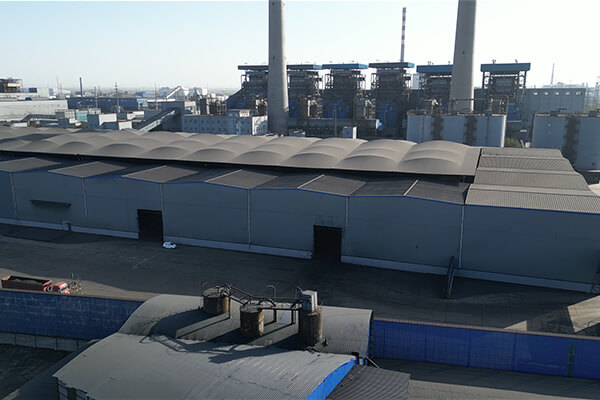
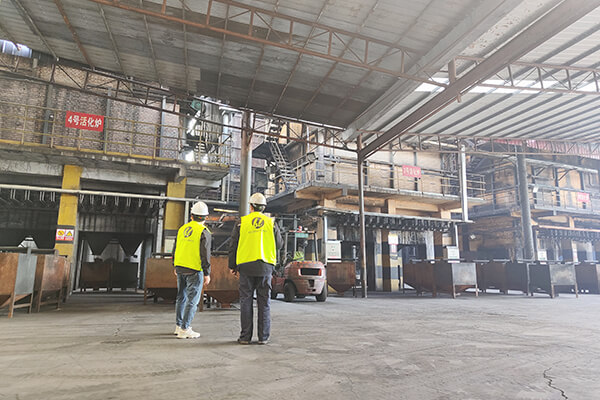
Heycarbons has sufficient inventory and strong production capacity, and will report production progress to you from time to time.
Shipping
Heycarbons know you need to receive the product as soon as possible, after rigorous quality checks and protective packaging, by fedex shipping.
Are You Looking for Activated Carbon For Paper Mill Wastewater?
Contact us for design assistance, free quote, and expert advice today.
Your inquiry will be replied within 24 working hours, and we respect your privacy.
You will get a quote in 24 hours