
Activated Carbon For MSG Monosodium Glutamate Decolorization
Why MSG Needs to be Treated with Activated Carbon?
Why does MSG need to be decolorized?
MSG is typically produced through microbial fermentation (using raw materials such as starch and molasses). The fermentation broth is highly complex, containing, in addition to the target product, glutamate, the following:
- Pigment sources: Pigments carried by the raw materials themselves (such as caramel color in molasses), metabolic byproducts produced during the fermentation process, microbial cell fragments, and Maillard reaction products that may be produced during subsequent processing.
- Impurities: Proteins, colloids, and other organic impurities.
These impurities can cause the fermentation broth to appear yellowish-brown or reddish-brown, making it unsuitable for direct production of a bright, white MSG product. Therefore, decolorization and purification are essential.
You will get a quote in 24 hours
You will get a quote in 24 hours
Functions of Activated Carbon for MSG Decolorization
Activated carbon can remove colored molecules and impurities in MSG, purify the monosodium glutamate solution, and also help improve the efficiency of subsequent MSG refining process.
1. Decolorization
Activated carbon uses van der Waals forces to capture and immobilize colored molecules in the fermentation broth (such as melanoidins, caramel pigments, and Maillard reaction products) within its micropores, thereby removing them from the solution.
2. Removing Impurities and Odors
In addition to pigments, fermentation broths contain other impurities that can affect product quality, which activated carbon can also effectively remove.
• Removing Colloids: Some proteins and polysaccharide colloids in the fermentation broth can cause turbidity. Activated carbon can adsorb these colloids, further improving solution clarity.
• Removing Odors and Precursors: Activated carbon can adsorb trace organic matter that causes odors, as well as pigment precursors that may react to produce new pigments during subsequent processes (such as heating and concentration). This not only improves the current color but also enhances product stability, preventing further discoloration during subsequent processing.
• Removing Residual Fermentation Byproducts: Such as miscellaneous acids and sugar degradation products, further purifying the monosodium glutamate solution.
3. Auxiliary Function: Improving Subsequent Process Efficiency
The design of the decolorization step has a significant impact on the efficiency and cost of the entire MSG refining process.
• Protecting the ion exchange resin: The decolorized solution then enters the ion exchange column to remove inorganic impurities such as metal ions. If pigments and large amounts of organic impurities are not first removed by activated carbon, they will quickly contaminate and clog the expensive ion exchange resin, leading to frequent resin regeneration, reduced efficiency, and shortened service life, significantly increasing production costs.
• Ensuring Crystallization Quality: Excessive impurities in the solution can affect the formation of monosodium glutamate crystals during concentration and crystallization, resulting in uneven crystal size, clumping, or a yellowing of the product.
Deep decolorization is crucial for obtaining regular, white, and lustrous MSG crystals.
You will get a quote in 24 hours
You will get a quote in 24 hours
Heycarbons Activated Carbon For MSG Decolorization
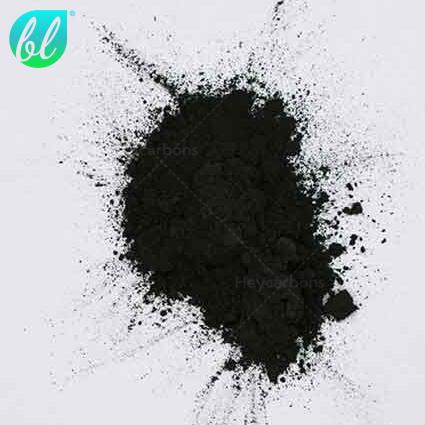
Heycarbons Wood Powdered Activated Carbon For MSG
Heysorbcarb-HEYWPAC activated carbon is a wood powdered activated carbon used in MSG decolorization.
Heycarbons activated carbon products have the characteristics of large specific surface area, high adsorption capacity, high wear resistance, fast filtration speed and high decolorization effect for MSG decolorization. The following specific product specifications can be referred to:
Powdered activated carbon from MSG solution
- size: 200mesh
- Iodine value: 800-1050 mg/g
- Methylene blue: 14-18 ml/0.1g
- PH: 4-7
- Ash: 6%max
- Caramel value: 100-150%
- transmittance (%),120%
- Packing: 20kg/bag
We can also customize activated carbon parameters according to your specific needs.
Heycarbons Wood Granular Activated Carbon For MSG Refining
Heysorbcarb-HEYWGAC activated carbon is a wood granular activated carbon used in MSG refining. The parameters suitable for MSG refining are as follows:
- Iodine value: 900 mg/g min.
- Strength: 90% min.
- Apparent density: 0.32-0.55 g/mL
- Granularity(800μm-280μm): 85% min.
- Moisture: 10% max.
- pH: 4.0-7
- Ash: 4% max. 6% max
- Iron content: 100ppm max.

Principle of Activated Carbon for MSG Decolorization
Activated carbon is a porous carbon material with an extremely large surface area and a well-developed pore structure. It has a strong adsorption capacity for pigment molecules and other impurities in MSG. Its decolorization mechanism is primarily based on the following:
1. Physical adsorption (primary function): Activated carbon utilizes its large surface area and van der Waals forces to attract pigment molecules (typically large organic molecules) into its pore structure. These pigment molecules are “captured” and immobilized, allowing them to be separated from the solution.
2. Chemical adsorption: Activated carbon contains oxygen-containing functional groups (such as carboxyl and phenolic hydroxyl groups) on its surface. These groups can chemically react with certain polar pigment molecules, enhancing adsorption.
You will get a quote in 24 hours
You will get a quote in 24 hours
How is MSG Decolorized-Using Activated Carbon?
Activated Carbon for MSG Decolorization Treatment Process
The activated carbon decolorization process in MSG production is after glutamic acid neutralization and before crystallization. The following are the detailed production line operation steps:
Step 1: Pretreatment – Prepare the MSG Solution to be Decolorized
• Input: Sodium glutamate solution from the neutralization process (typically approximately 25-30% concentration). This solution is pale yellow or yellow-brown and contains impurities such as pigments, residual proteins, colloids, and trace amounts of iron ions.
• Conditioning: Pump the solution into the decolorization tank (a reactor equipped with a stirrer and heater).
• Heating: Raise the solution temperature to 60-70°C using a steam or hot water jacket. Heating reduces solution viscosity, increases molecular thermal motion, and significantly improves the adsorption efficiency of the activated carbon.
• pH Adjustment: Check and ensure the solution’s pH is neutral or slightly alkaline (typically pH 6.5-7.5). This environment is most conducive to pigment adsorption by the activated carbon.
Step 2: Adding Activated Carbon
• Selecting the Carbon Type: Use powdered activated carbon (PAC), specifically formulated for food decolorization. Powdered activated carbon (PAC) is typically made from wood or coconut shells and boasts a large surface area and a well-developed microporous structure.
• Determining the Dosage: The amount of activated carbon added must be precisely calculated based on the color of the solution (measured by transmittance or color). A typical dosage range is 0.5% to 3% of the dry weight of the solution. Add more for darker colors and less for lighter colors.
• Dosing: Evenly distribute the weighed powdered activated carbon into the decolorization tank to avoid forming clumps that are difficult to disperse.
Step 3: Stirring and Adsorption
• Thorough Mixing: Start the agitator in the decolorization tank and maintain a moderate stirring speed (approximately 20-30 rpm) to ensure thorough and even contact between the activated carbon powder and the solution.
• Adsorption Time: Maintain stirring and temperature for 20-40 minutes. This allows the activated carbon’s pore structure to fully absorb the pigment and impurity molecules. Too short a time will result in incomplete adsorption, while too long a time may result in poor efficiency.
Step 4: Separating Residual Carbon – Filtration
• Transport: After adsorption is complete, the solution mixed with activated carbon is pumped into the filtration system.
• Core Equipment: A plate and frame filter is typically used. Filter paper or cloth is pre-placed inside the filter. Under the pressure of the pump, the clear filtrate passes through the cloth, while the spent activated carbon, which has absorbed all impurities, is intercepted by the cloth, forming a thick “filter cake” on the filter frame.
• Product: The “head liquid” that may not be clear enough during the initial filtration is returned for refiltration. The final filtrate should be a clear, almost colorless sodium glutamate solution.
• Fine Filtration: To ensure that no carbon particles remain, the filtrate is sometimes passed through a precision filter (or safety filter) to capture any tiny carbon particles that may have penetrated the filter.
Step 5: Post-Processing and Residue Disposal
• Filtrate Destination: The clear filtrate is sent to the next process—the concentration and crystallization tank—for evaporation and crystallization.
• Removal of Residual Carbon: After filtration, the plate and frame filter is opened and the “carbon cake” in the filter frame is removed.
This waste activated carbon, due to its excessive adsorption of impurities, is difficult and costly to regenerate, and is typically treated as solid waste and incinerated in an environmentally friendly manner.
You will get a quote in 24 hours
You will get a quote in 24 hours
Custom Heycarbons Activated Carbon Solution for MSG Decolorization
Heycarbons provides a full range of activated solutions at competitive prices.
You will get a quote in 24 hours
Customize Heycarbons Activated Carbon for MSG Decolorization
Heycarbons has proudly served the MSG activated carbon industry with high-quality products since 2005, Heycarb can customize activated carbon for your project.
- Heycarbons customized package to promote your brand, and free design service.
- Customized monosodium glutamat carbon size, methylene blue, iodine value, pH, etc.
Call Us
+86-180 3788 5195
Our Email
info@heycarbons.com
Steps to Custom Heycarbons Activated Carbon for MSG Decolorization
Consultation
By understanding your needs and requirements, our salesmen work with you to submit the appropriate activated carbon solution.
Quotation
Heycarbons expert customer service will provide you with a free quote based on your requirements as well as product specifications and quantities.
Production
Heycarbons has sufficient inventory and strong production capacity, and will report production progress to you from time to time.
Shipping
Heycarb know you need to receive the product as soon as possible, after rigorous quality checks and protective packaging, by fedex shipping.
Are You Looking for Heycarbons Activated Carbon Manufacturers?
Contact us for design assistance, free quote, and expert advice today.
Your inquiry will be replied within 24 working hours, and Heycarbons respect your privacy.
You will get a quote in 24 hours