Activated Carbon For Butane Adsorption Heycarbons Manufacturer From China
- Over 20 years of industry experience in activated carbon manufacturing
- Annual output 18000 tons
- 16pcs Production Patents
- High CTC, 60-110%
- Low S, Low Fe, Low ash, High hardness.
You will get a quote in 24 hours
Why does butane need to be treated with activated carbon?
Butane in automotive fuel (evaporative emissions) needs to be treated. Butane is a highly volatile, light component in gasoline that easily vaporizes at room temperature. If left untreated, it will evaporate from the fuel system and escape into the atmosphere.
1. Driving Safety: Eliminating Fire Hazards
Butane is a highly flammable gas.
- Explosion Risk: If vapors accumulate in the engine compartment or under the vehicle, they can easily cause a fire or even explosion if ignited by an ignition source such as an electrical spark or a hot exhaust pipe.
- Fuel Tank Pressure: In high-temperature environments, gasoline vaporization can cause a sharp increase in internal tank pressure, posing a safety hazard. An effective fuel vapor treatment system (such as a carbon canister) can balance pressure and ensure safety.

2. Environmental Protection: Reducing Harmful Pollutants and Smog (Haze) Formation
This is the most core and important reason.
- Ground-Level Ozone (O₃) and Photochemical Smog Formation: Butane is a volatile organic compound (VOC). When exposed to sunlight, VOCs react photochemically with nitrogen oxides (NOx) to produce ground-level ozone, the primary component of photochemical smog.
- PM2.5 Contribution: These photochemical reactions also generate secondary organic aerosols (SOAs), a significant component of PM2.5 fine particulate matter and one of the primary culprits of smog.
Therefore, activated carbon is needed to adsorb butane in oil and gas.
You will get a quote in 24 hours
You will get a quote in 24 hours
Activated Carbon For Butane Adsorption Principle
Butane adsorption on activated carbon is primarily a physical adsorption process driven by van der Waals forces.
• Activated carbon structure: Activated carbon is a porous carbon material with an extremely well-developed pore structure (including macropores, mesopores, and micropores) and a large specific surface area (typically 500-1500 m2/g). This provides numerous attachment sites for gas molecules.
• Properties of butane: Butane (C₄H₁₀) is a non-polar organic molecule that is a gas at room temperature and pressure. Its molecular weight is moderate, and its molecular size matches the pore size of activated carbon’s numerous micropores. The micropores of activated carbon (<2 nm) are most effective for adsorbing small hydrocarbons such as butane.
• Process: When butane gas comes into contact with activated carbon, van der Waals forces capture and fixate the butane molecules on the inner surfaces of the activated carbon’s pores. This process releases heat (heat of adsorption). Since it is a physical reaction, desorption can be achieved by increasing the temperature or reducing the partial pressure.
You will get a quote in 24 hours
You will get a quote in 24 hours
Heycarbons Best Activated Carbon For Butane Adsorption
Coal Extruded Activated Carbon for Butane Adsorption
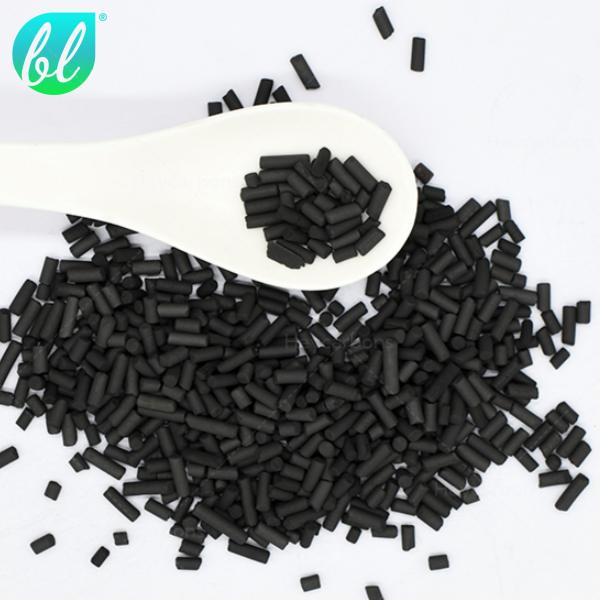
Heysorbcarb-HeyEAC activated carbon is a high-strength coal columnar activated carbon made from high-quality anthracite,crushed and ground into powder, then reshaped with a binder,and activated by high-temperature steam.
| Project | Specification |
|---|---|
| Particle size | 3mm, 4mm |
| CTC | 50-100% |
| Iodine value | 800-1100 mg/g |
| Moisture | 5% max. |
| Bulk density | 350-500kg/m3 |
| Strength | 95% min. |
| Ash | 15% max. |
| Butane working capacoty | 18-40 |

Heycarbons Wood Extruded Activated Carbon for Butane Adsorption
Heysorbcarb-HeyWEAC activated carbon is a wood pelletized activated carbon produced by Heycarbons for butane removal.It can also be used for butane adsorption. Its advantage is that it has a higher specific surface area and butane adsorption value for the same CTC. but the price is higher than coal HEYEAC. You can choose to use coal-based or wood-based columnar activated carbon according to your actual needs.
| Project | Specification |
|---|---|
| Particle size | 1.5, 2, 4, 6, 8mm |
| CTC | 70-110% |
| Iodine value | 800-1100 mg/g |
| Moisture | 5% max. |
| Bulk density | 350-450kg/m3 |
| Hardness | 97% min. |
| Ash | 8% max. |
| PH | 8-11 |
What is the Butane activity of activated carbon?
Activated carbon used for oil and gas adsorption requires a high butane activity activated carbon (butane working capacity) for faster desorption. The CTC value of activated carbon is positively correlated with its butane adsorption capacity (butane number activated carbon). Butane working capacity is about 18-40.
The CTC value (Carbon Tetrachloride Adsorption Capacity) measures the adsorption capacity of activated carbon for larger organic vapor molecules. It is generally more closely related to the development of macropores and transitional pores.
The specific surface area (BET SSA) reflects more on the number of micropores.
The pore structure of wood-based activated carbon tends to have a higher proportion of micropores, while that of coal-based activated carbon tends to have a higher proportion of mesopores and macropores.
Butane Working Capacity (BWC): Butane molecules have a diameter of approximately 0.42 nm, so adsorption primarily relies on mesopores and macropores, rather than the smallest micropores.
Therefore, butane adsorption is more closely related to the CTC value and pore size distribution (especially pores >1 nm), rather than simply specific surface area.
If you want to know more specific CTC value and butane working capacity, please contact Heycarbons.
Please tell us your requirements and application, Heycarbons can customize the activated carbon product parameters for you.
You will get a quote in 24 hours
You will get a quote in 24 hours
Activated Carbon For Butane Adsorption Process
Activated carbon treatment of butane in automotive fuel and gas is a core process in modern vehicle evaporative emissions control (EVAP) systems.
The core of the entire process is a cycle of adsorption and desorption. Think of it as the activated carbon using an invisible net to capture butane molecules and then releasing them.
Step 1: Adsorption – “Capturing and Locking” Fuel and Vapor (When the Engine is Off)
1. Fuel and vapor generation: After the car is turned off, the gasoline in the fuel tank (including highly volatile components such as butane) evaporates due to elevated ambient temperature (e.g., sunlight), forming high-pressure fuel and vapor.
2. Introduction to the carbon canister: The pressure within the fuel tank pushes this fuel and vapor mixture through a pipe to the charcoal canister, a black plastic container typically located in the engine compartment or near the chassis.
3. Activated carbon adsorption: The carbon canister is filled with high-performance activated carbon. This activated carbon has been specially treated to possess an extremely large surface area (one gram of activated carbon can cover an area as large as a football field) and is densely porous.
4. Intermolecular forces: When butane-rich fuel and gas flow through the activated carbon, the fuel and vapor molecules (especially hydrocarbons such as butane) are firmly held to the activated carbon’s large surface area by van der Waals forces, much like a magnet attracts iron filings. Components such as air remain unaffected and can escape.
At this point, harmful oils and gases such as butane are effectively “locked” in the carbon canister instead of being released into the atmosphere.
Step 2: Desorption – “Releasing and Recovering” Fuel and Vapor (While the Engine is Running)
If the carbon canister is simply adsorbed, it will quickly become saturated and ineffective. Therefore, the system requires a “cleaning and regeneration” process.
1. Engine Start: When the engine starts and reaches a certain operating temperature (usually water temperature, engine speed, and other conditions), the on-board computer (ECU) begins controlling the carbon canister cleaning process.
2. Solenoid Valve Opening: The ECU opens a solenoid switch called a purge valve. This valve is connected between the carbon canister and the engine’s intake manifold.
3. Vacuum Generation: When the engine is running, a strong vacuum is generated in the intake manifold.
4. Fresh Air Intake: This vacuum draws in fresh air through the canister’s vent (usually labeled “Fresh Air” in diagrams).
5. Desorption and Cleaning: This fresh air flows through the activated carbon, saturated with oil and gas, much like water flowing through a sponge, “washing” away oil and gas molecules (such as butane) previously adsorbed on the surface. This process is called desorption.
6. Injection into the engine for combustion: The desorbed oil and gas mix with fresh air to form a mixed gas, which is then drawn into the intake manifold through an open purge valve and ultimately enters the engine cylinders, where it is burned along with the normal gasoline.
At this point, the trapped butane and other fuels are burned as normal fuel, achieving recycling. Simultaneously, the carbon canister is “cleaned,” restoring its adsorption capacity and preparing for the next adsorption cycle.
Advantages of Heycarbons activated carbon in adsorbing butane
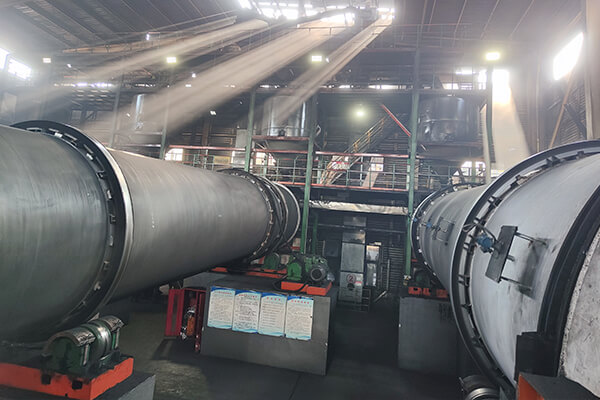
- Cleaner: Heycarbons uses a unique airflow carbonization method to make the activated carbon higher strength, less ash and cleaner.
- Activated carbon regeneration: The high strength allows the activated carbon to be used continuously for many years, thus reducing operating costs.
- High-efficiency purification: Removal efficiencies typically exceed 95%.
- Resource recovery: Converts butane from “waste gas” to “product,” generating economic benefits.
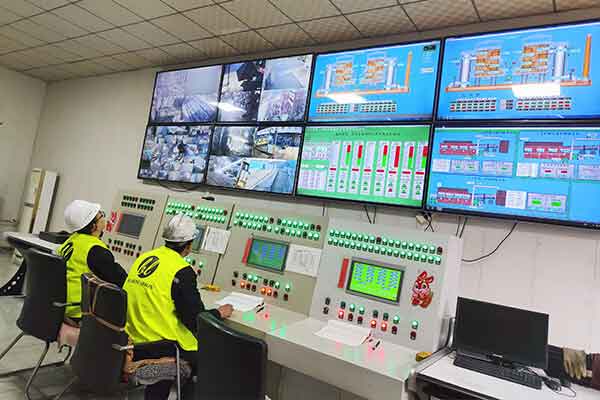
- High degree of automation: Enables fully automatic control and continuous operation.
You will get a quote in 24 hours
You will get a quote in 24 hours
Activated Carbon For Butane Adsorption Applications
1. Automobiles and Fuel Evaporation Control
Carbon Canisters (EVAP Systems): Activated carbon canisters in vehicles absorb gasoline vapors (primarily C4-C12 hydrocarbons, including butane) escaping from fuel tanks, preventing them from being released into the air.
This is the most typical application for butane adsorption.
2. Petrochemical and Refining Industry
Vapor Recovery Units (VRUs): Hydrocarbon gases are released during storage and transportation at tank farms, gas stations, and refineries. Activated carbon is used to recover butane, propane, and gasoline vapors.
It is commonly used for controlling breath loss in storage tanks and recovering vapors at loading platforms.
3. Chemical Industry (Organic Solvent Recovery)
Enterprises using butane, hexane, benzene, and alcohol-ketone solvents (such as those in the paint, adhesives, printing, rubber, and electronics industries) use activated carbon to recover volatile hydrocarbon solvents. Butane adsorption capacity is a key indicator of carbon quality.
4. Environmental Management and Testing
VOCs Waste Gas Treatment: Butane is often used as a standard test gas to evaluate the performance of activated carbon in air purification and environmental management.
Activated Carbon Quality Inspection: Butane adsorption testing is a common quality indicator for activated carbon in markets such as Europe, the United States, and Japan.
5. Portable Energy & Other Niche Applications
Lighter Gas Storage (butane is the fuel, requiring activated carbon to regulate vapor pressure).
Aerosol and Spray Cans: Some use butane as a propellant, and activated carbon can be used for leak absorption or recovery.
You will get a quote in 24 hours
You will get a quote in 24 hours
Custom Heycarbons Activated Carbon Solution For Butane Adsorption
Heycarbons provides a full range of activated solutions at competitive prices.
You will get a quote in 24 hours
What Clients Say on Our Activated Carbon
Custom Heycarbons Activated Carbon For Butane Adsorption
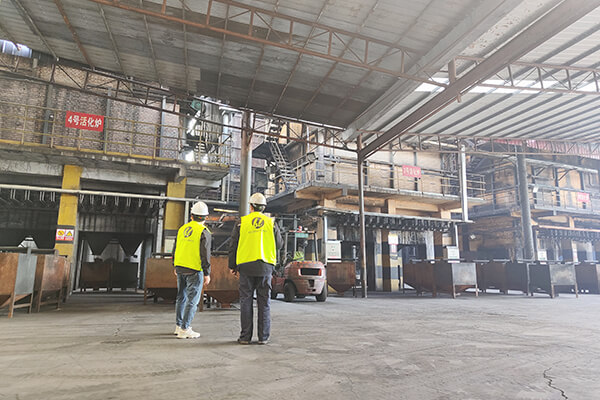
Heycarbons has proudly served the activated carbon industry with high-quality products since 2005.
You can ask customize your coal pelletized activated carbon specification for your project.
- Customized size, CTC, iodine value, ash, etc.
- Personalized service and advice based on your needs and preferences.
- Cost-effective solutions customized according to customer applications.
Steps to Customize Heycarbons Activated Carbon For Butane Adsorption
Consultation
By understanding your needs and requirements, our salesmen work with you to submit the appropriate activated carbon solution.
Quotation
Heycarbons expert customer service will provide you with a free quote based on your requirements as well as product specifications and quantities.
Production
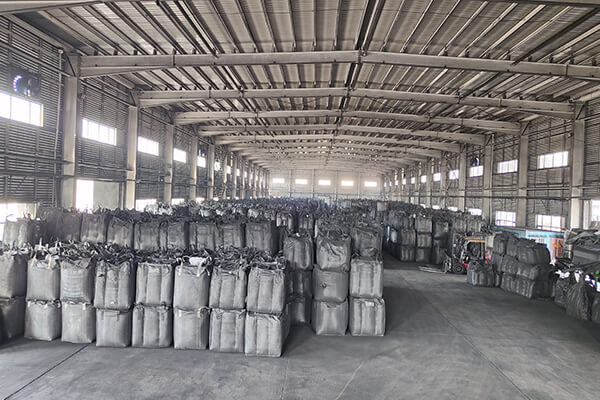
Heycarbons has sufficient inventory and strong production capacity, and will report production progress to you from time to time.
Shipping
Heycarbons know you need to receive the product as soon as possible, after rigorous quality checks and protective packaging, by fedex shipping.


Are you looking for activated carbon for butane adsorption
Contact us for design assistance, free quote, and expert advice today.
Your inquiry will be replied within 24 working hours, and we respect your privacy.
You will get a quote in 24 hours